Analog Monday: Air Force and Renaissance cameras 10% off until November 30, 2026

Analog Monday: −10% su Air Force e Rinascimentali

Analog Monday: Air Force and Renaissance cameras 10% off until November 30, 2026

Analog Monday in the workshop

Everyone talks about Cyber Monday. Here in the workshop, I prefer Analog Monday: bellows, ground glass and photographs made one shot at a time.

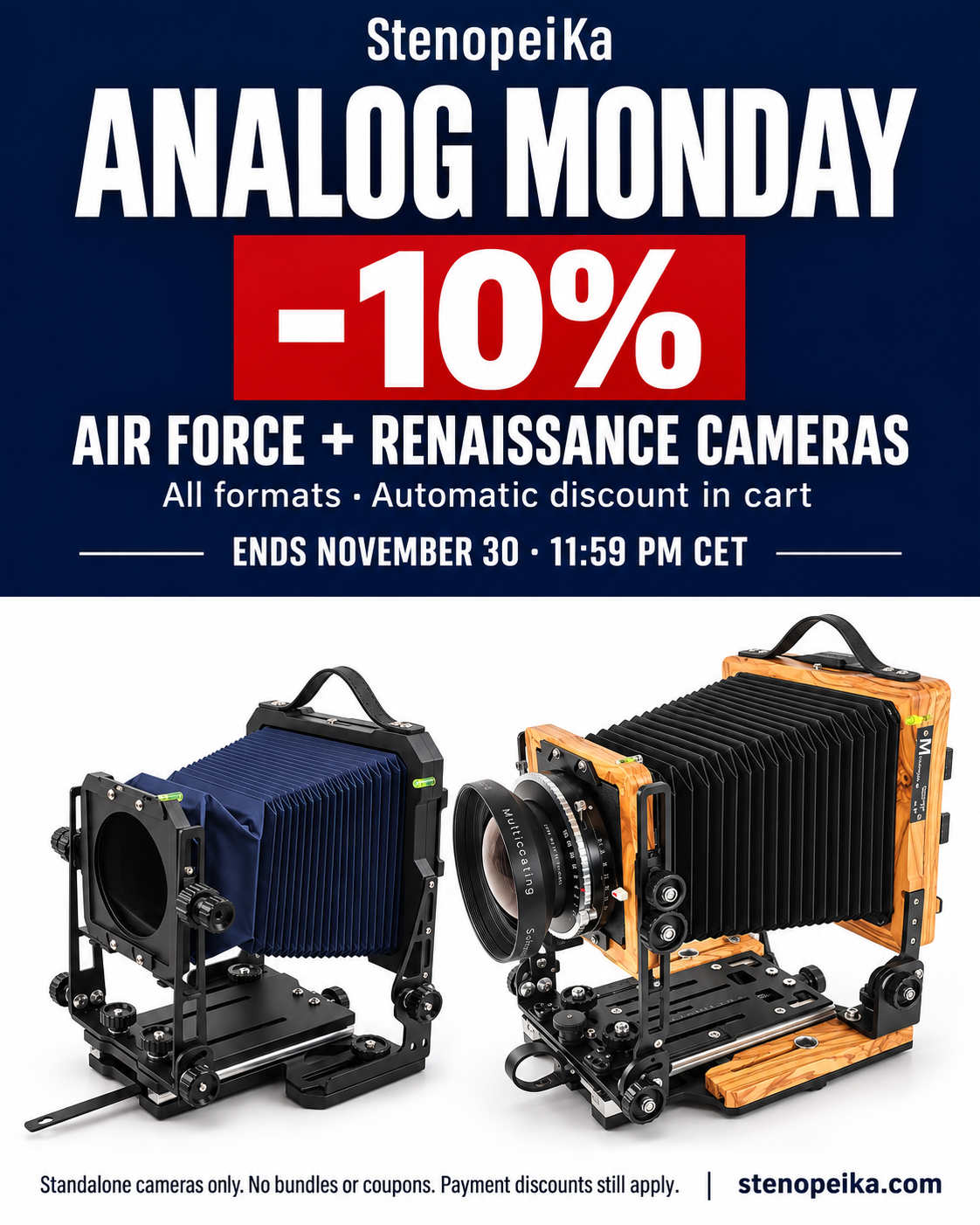
From November 28 until Monday, November 30, 2026 at 11:59 pm CET, you get 10% off standalone Air Force and Renaissance cameras, in every available format.

The discount is applied automatically in your cart. No code and no film holder purchase needed.

Two camera families, the same workshop

Air Force and the Renaissance range are both part of what I build here in Tuscany. Whether you are choosing your first large format camera or looking for a different format, this is a chance to take a closer look.

For example: Air Force 4×5 mk2, €597 → €537.30; Michelangelo 4×5 mk2, €1,597 → €1,437.30. Prices exclude VAT and shipping.

Explore Analog Monday

Cannot be combined with other coupons.

Not sure which format or lens to choose? Write to ci**@********ka.com. I will be happy to help.

Ciao!
Samuele

Analog Monday in bottega

Tutti parlano di Cyber Monday. Qui in bottega preferisco Analog Monday: soffietti, vetri smerigliati e fotografie fatte uno scatto per volta.

Dal 28 novembre fino a lunedì 30 novembre 2026 alle 23:59, ora italiana, trovi il −10% sulle fotocamere Air Force e Rinascimentali vendute singolarmente, in tutti i formati disponibili.

Lo sconto si applica automaticamente nel carrello. Non serve un codice e non occorre acquistare un portapellicole.

Due famiglie, la stessa bottega

Air Force e Rinascimentali fanno entrambe parte di quello che costruisco qui in Toscana. Che tu stia scegliendo la prima fotocamera grande formato o cercando un formato diverso, è un’occasione per guardarle più da vicino.

Due esempi: Air Force 4×5 mk2, 597 € → 537,30 €; Michelangelo 4×5 mk2, 1.597 € → 1.437,30 €. IVA e spedizione escluse.

Scopri Analog Monday

Non si cumula con altri coupon.

Hai un dubbio sul formato o sull’obiettivo? Scrivimi a ci**@********ka.com: ti aiuto volentieri.

Ciao!
Samuele

Air Force 4×5 MK2 e Air Force 8×10

Il Black Friday è arrivato in bottega

Air Force 4×5 MK2 e Air Force 8×10

Black Friday has made it to the workshop

Even here in rural Tuscany, I do move with the times now and then. 😄 This year I decided to join in and put together two offers.

Air Force: a second film holder free

Add an eligible Air Force camera and a compatible film holder to your cart. A second holder of the same format is automatically added for free. The offer applies to standalone cameras.

Wetplate MK4: 10% off

The discount applies automatically in the cart to the 4×5, 5×7, 8×10 and 11×14 holders.

Both offers end Friday, November 27 at 11:59 p.m. Italian time. Other coupons are excluded. Payment-method discounts still apply.

See the Black Friday offers

For more updates from my workshop, subscribe to the StenopeiKa newsletter.

Ciao!
Samuele

Il Black Friday è arrivato in bottega

Anche qui, nella Toscana rurale, ogni tanto ci si evolve. 😄 Quest’anno ho deciso di seguire la tendenza anch’io e ho preparato due offerte.

Air Force: il secondo portapellicole è in omaggio

Aggiungi al carrello un’Air Force in promozione e un portapellicole compatibile. Il secondo portapellicole dello stesso formato si aggiunge automaticamente in omaggio. L’offerta vale sulle fotocamere vendute singolarmente.

Wetplate MK4: −10%

Lo sconto si applica automaticamente nel carrello ai formati 4×5, 5×7, 8×10 e 11×14.

Le offerte scadono venerdì 27 novembre alle 23:59, ora italiana. I coupon sono esclusi. Restano validi gli sconti per metodo di pagamento.

Vedi le offerte Black Friday

Se vuoi sapere cos’altro bolle in pentola, iscriviti alla newsletter di StenopeiKa.

Ciao!
Samuele

Why the NEW 11×14 Wet Plate Holder MK4 Changes ULF collodion Workflow

Big Format. Smaller Footprint.

After introducing the fourth generation of StenopeiKa wet plate holders in 4×5, 5×7 and 8×10 formats, it was time to take another step forward.

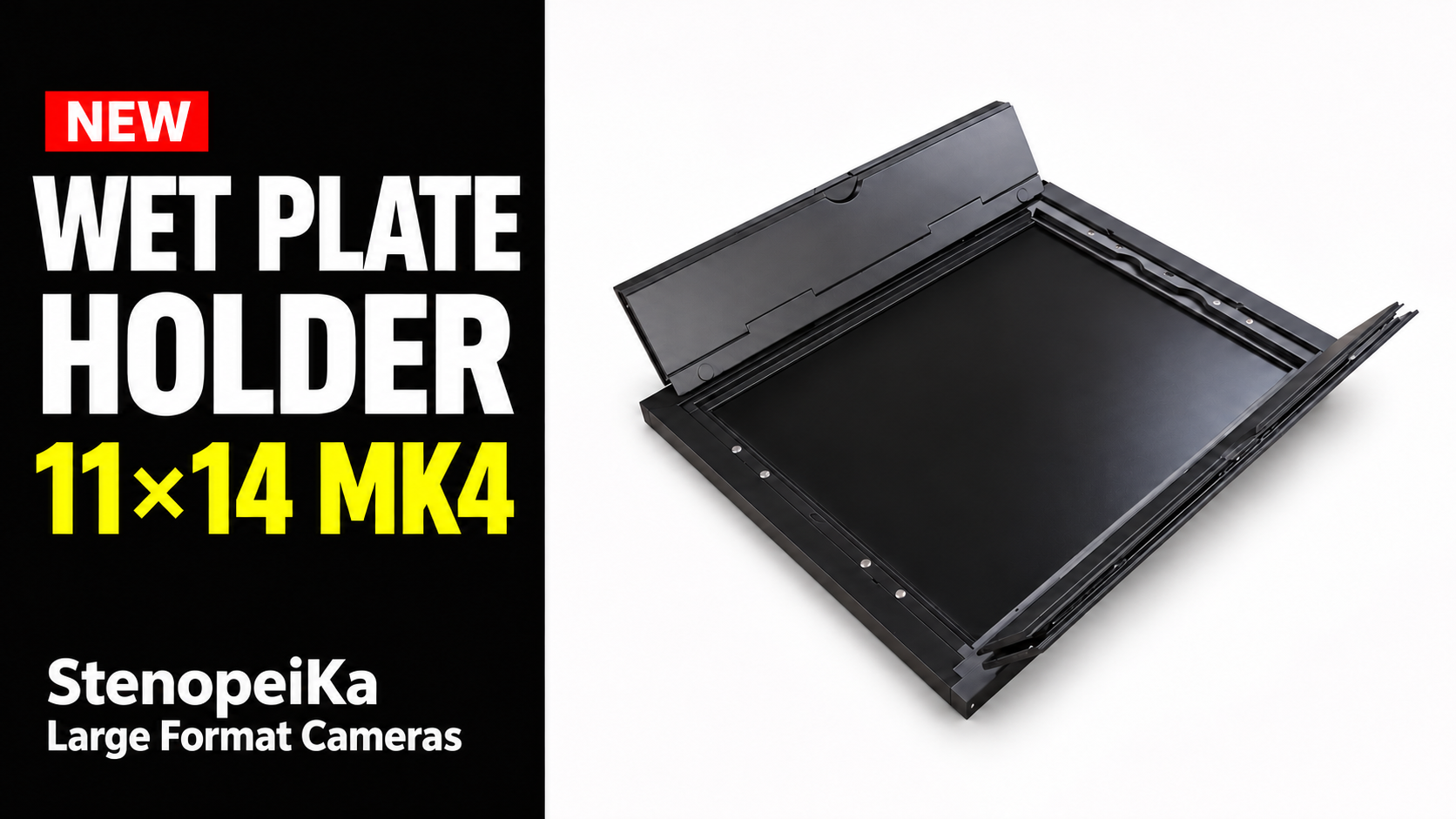
The new 11×14 MK4 Wet Plate Holder has arrived.

But this time, I wanted to do something more than simply make a larger holder. I wanted to solve a problem.

The Problem with Ultra Large Format

Anyone who has worked with wet plate collodion photography knows that space is always an issue.

You need room for your plates, processing trays, equipment and everything else that makes this fascinating photographic process possible.

With an 8×10 holder, the space required to open the rear door is generally manageable. But moving to 11×14 changes things considerably.

A traditional rear door can occupy a large additional area when opened, taking up valuable space on an already crowded darkroom table.

At some point, you start feeling as though you need one of those ridiculously long dining tables from an old Dracula cartoon, with the two guests sitting miles apart! 😁

And that made me think: could I improve this?

The Idea: A Folding Rear Door

The solution was to completely rethink the rear opening mechanism.

Instead of using a traditional door that requires a large amount of free space, I developed a new accordion-style folding system.

The door folds back on itself, occupying much less space during plate loading.

And that's the important distinction. The holder still has the standard external dimensions of an 11×14 holder. It is the opening mechanism that becomes much more compact.

This allows the holder to maintain compatibility with modern 11×14 camera backs conforming to ANSI holder dimensions, while making the loading process more practical.

The traditional plate-loading procedure remains unchanged.

Simply open the door, insert your plate and close it. The spring-loaded system holds the plate in position.

No new techniques to learn. Just a smarter mechanical solution.

Lightweight and Practical

The new 11×14 MK4 is made from PETG and weighs approximately 1 kg.

It accepts nominal 11×14 inch plates measuring 279.4 × 355.6 mm, with a tolerance of ±1 mm on each dimension and a maximum thickness of 3 mm.

Its external dimensions follow the ANSI standard for 11×14 holders, making it suitable for compatible modern large-format cameras.

These characteristics make it particularly interesting for photographers who use portable darkrooms or frequently work outdoors.

From 8×10 to 11×14 Without a Giant Table?

This was one of the main reasons behind the project.

If you already have a workspace organized for 8×10 wet plate photography, the new folding mechanism may allow you to accommodate an 11×14 holder without significantly increasing the size of your table.

Naturally, the larger plates still require appropriately sized processing trays and equipment.

But removing the extra space needed to open a conventional holder is a significant improvement.

And sometimes that's exactly what makes a difficult process more manageable.

Making Difficult Things Easier

Wet plate collodion photography will never be a simple technique.

And working in Ultra Large Format adds another level of complexity.

But I believe we should always question whether every practical difficulty is really necessary.

At StenopeiKa, my goal has always been to find solutions that make large-format photography more accessible.

The new 11×14 MK4 is another step in that direction.

And I must admit, I'm particularly proud of this one.

Watch the New 11×14 MK4 in Action

In my latest video, I explain how the idea came about and demonstrate the new folding rear door mechanism.

Watch the 11×14 MK4 presentation on YouTube

Discover the new StenopeiKa 11×14 MK4 Wet Plate Holder

Subscribe to the StenopeiKa newsletter

Samuele
StenopeiKa – Large Format Cameras

Grande formato. Piccolo ingombro operativo.

Dopo aver presentato la quarta generazione dei porta piatti StenopeiKa nei formati 4×5, 5×7 e 8×10, era arrivato il momento di compiere un altro passo.

È nato così il nuovo Wetplate Holder 11×14 MK4.

Ma questa volta non volevo semplicemente realizzare un porta piatti più grande. Volevo risolvere un problema.

Il problema dell'Ultra Large Format

Chi ha avuto occasione di lavorare con la tecnica del collodio umido sa perfettamente quanto sia importante lo spazio disponibile.

Servono superfici per le lastre, le vaschette, le attrezzature e tutti gli accessori necessari per questo affascinante procedimento fotografico.

Con un porta piatti 8×10 lo spazio necessario per aprire lo sportello posteriore è generalmente gestibile. Ma quando si passa al formato 11×14 le cose cambiano.

Uno sportello tradizionale può richiedere una superficie aggiuntiva considerevole, occupando spazio prezioso su un tavolo già pieno di attrezzature.

A un certo punto sembra quasi che serva uno di quei tavoli lunghissimi dei vecchi cartoni animati di Dracula, dove i due commensali sono seduti alle estremità a mezzo chilometro di distanza! 😁

E allora mi sono chiesto: possiamo migliorare questa situazione?

L'idea: uno sportello pieghevole a fisarmonica

La soluzione è stata ripensare completamente il meccanismo di apertura posteriore.

Invece di utilizzare uno sportello tradizionale che richiede un'ampia superficie libera, ho sviluppato un nuovo sistema pieghevole a fisarmonica.

Lo sportello si richiude su se stesso, occupando molto meno spazio durante il caricamento della lastra.

Ed è proprio questa la differenza fondamentale. Il porta piatti mantiene le dimensioni esterne standard di un 11×14. È il meccanismo di apertura a diventare molto più compatto.

Questo permette di mantenere la compatibilità con i dorsi delle moderne fotocamere 11×14 conformi alle dimensioni ANSI e, allo stesso tempo, rendere il caricamento molto più pratico.

Il procedimento rimane quello tradizionale.

Si apre lo sportello, si inserisce la lastra e si richiude. Il sistema a molle provvede a mantenerla nella posizione corretta.

Nessuna nuova tecnica da imparare. Soltanto una soluzione meccanica più intelligente.

Leggero e pratico

Il nuovo 11×14 MK4 è realizzato in PETG e pesa circa 1 kg.

Accoglie lastre nominali da 11×14 pollici, corrispondenti a 279,4 × 355,6 mm, con una tolleranza di ±1 mm su ciascuna dimensione e uno spessore massimo di 3 mm.

Le dimensioni esterne rispettano lo standard ANSI per i porta pellicola 11×14, permettendone l'utilizzo con le moderne fotocamere compatibili.

Caratteristiche particolarmente interessanti per chi utilizza camere oscure portatili o lavora frequentemente all'aperto.

Dall'8×10 all'11×14 senza un tavolo gigantesco?

È proprio da questa considerazione che è nata gran parte del progetto.

Se avete già organizzato una postazione per lavorare con il collodio umido in formato 8×10, il nuovo meccanismo pieghevole potrebbe permettervi di utilizzare anche un porta piatti 11×14 senza dover aumentare considerevolmente le dimensioni del tavolo.

Naturalmente le lastre più grandi richiedono comunque vaschette e attrezzature adeguate.

Ma eliminare lo spazio aggiuntivo necessario per aprire uno sportello tradizionale è già un miglioramento importante.

E qualche volta è proprio questo che rende una procedura complessa più gestibile.

Rendere facile ciò che è difficile

La fotografia al collodio umido non diventerà mai una tecnica semplice.

E lavorare in Ultra Large Format aggiunge ulteriori difficoltà.

Ma credo che dovremmo sempre chiederci se ogni complicazione pratica sia davvero inevitabile.

Con StenopeiKa il mio obiettivo è sempre stato quello di trovare soluzioni che rendano la fotografia in grande formato più accessibile.

Il nuovo 11×14 MK4 rappresenta un altro passo in questa direzione.

E devo ammettere che questa volta sono particolarmente orgoglioso del risultato.

Guarda il nuovo 11×14 MK4 in azione

Nel mio ultimo video vi racconto come è nata l'idea e vi mostro il funzionamento del nuovo sportello posteriore pieghevole.

Guarda la presentazione del nuovo 11×14 MK4 su YouTube

Scopri il nuovo StenopeiKa Wetplate Holder 11×14 MK4

Iscriviti alla newsletter StenopeiKa

Samuele
StenopeiKa – Large Format Cameras

What are wide-angle bellows for?

ITALIANO

A cosa serve il soffietto grandangolare?

A prima vista sembra un accessorio un po’ strano: al posto delle pieghe regolari del soffietto tradizionale, una sacca morbida collega le due standarte. Ma il soffietto grandangolare, chiamato anche soffietto a sacco o floscio, risponde a un problema molto concreto.

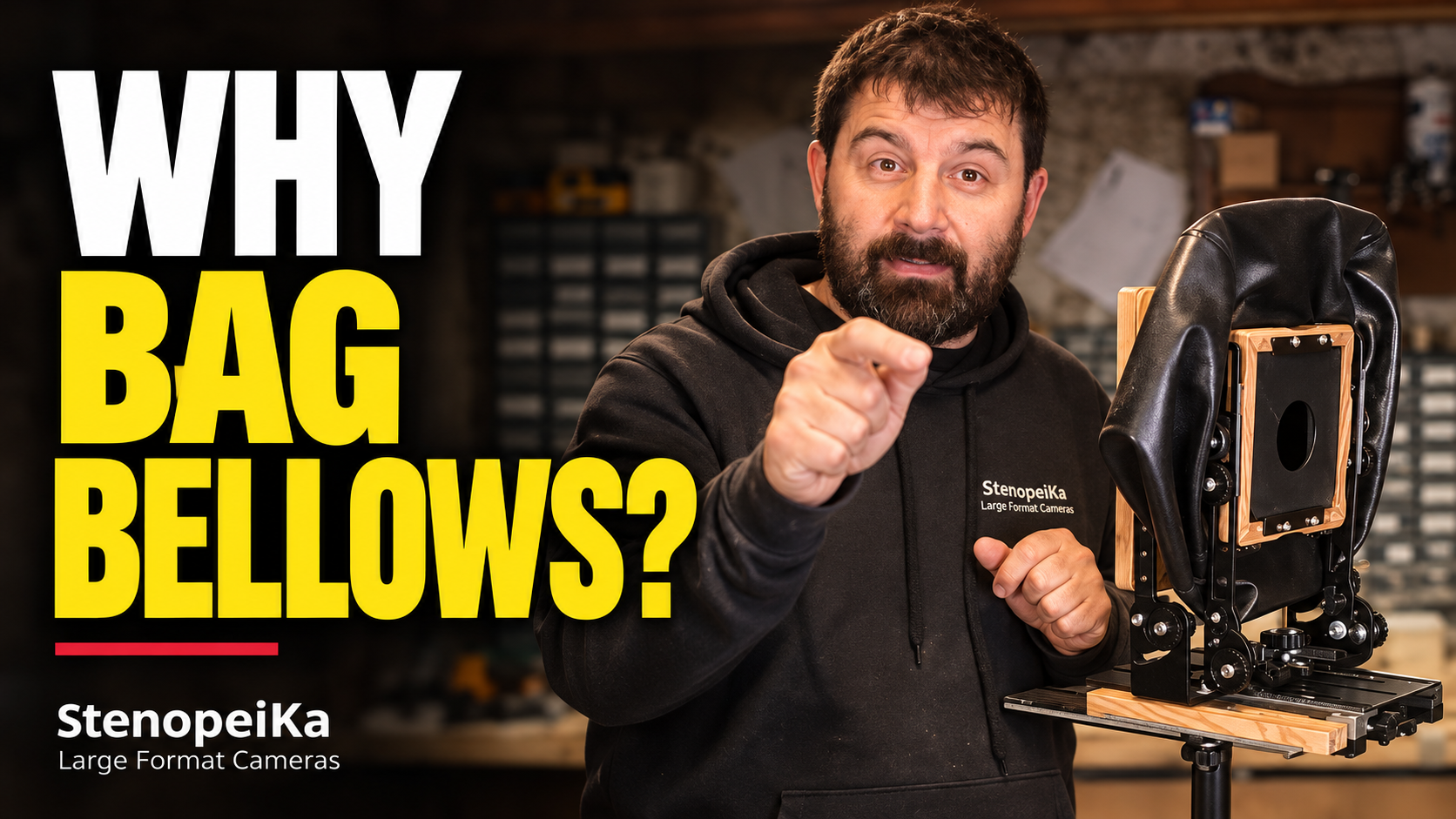
Nel nuovo video dalla bottega lo mostro su una Michelangelo 4×5 in ulivo con soffietto blu, confrontando la libertà di movimento dei due tipi di soffietto.

Guarda il video completo
Parlato in italiano, con sottotitoli inglesi.

Corte focali, standarte vicine

Quando si usano obiettivi grandangolari sul grande formato, l’obiettivo deve trovarsi vicino al piano pellicola. Questo porta le due standarte ad avvicinarsi e il soffietto tradizionale a comprimersi.

Le pieghe, così raccolte, possono diventare rigide e opporsi ai movimenti della fotocamera. Nel video mostro come la situazione cambi quando le standarte sono più distanti e come la libertà si riduca avvicinandole.

Perché usare un soffietto a sacco

Il soffietto grandangolare è morbido e privo di pieghe fisse. Permette quindi di avvicinare molto le standarte lasciando maggiore libertà alla standarta anteriore.

Nella dimostrazione provo il decentramento e il basculaggio anteriore, sia dalla lensboard sia dalla base. È questa la sua utilità: conservare la possibilità di comporre e lavorare con i movimenti anche alle corte estensioni richieste dai grandangolari.

Per approfondire

Nel video segnalo l’articolo di Alberto Lagomaggiore dedicato agli obiettivi grandangolari su Large Format Diary #05, settembre 2026. Un approfondimento per continuare a esplorare il tema oltre alla dimostrazione pratica.

Tu quali grandangolari usi? Ti è mai capitato di trovare il soffietto troppo rigido per il movimento che volevi fare?

📬 Per ricevere novità dal laboratorio, nuovi prodotti e i prossimi “Cosa bolle in pentola?”, iscriviti alla newsletter.

Un saluto dalla bottega,
Samuele
StenopeiKa — Large Format Cameras

ENGLISH

What are wide-angle bellows for?

At first glance, they look a little unusual: instead of the regular folds of ordinary bellows, a soft bag connects the two standards. But wide-angle bellows, also known as bag bellows, solve a very practical problem.

In the new workshop video, I demonstrate them on a Michelangelo 4×5 in olive wood with blue bellows, comparing the freedom of movement offered by the two types.

Watch the full video
Spoken in Italian, with English subtitles.

Short focal lengths, close standards

When you use a wide-angle lens on a large format camera, the lens needs to sit close to the film plane. This brings the two standards closer together and compresses ordinary pleated bellows.

With the folds packed together, the bellows can become stiff and resist camera movements. In the video, I show how things change when the standards are farther apart and how that freedom decreases as they come closer together.

Why use bag bellows?

Wide-angle bellows are soft and have no fixed pleats. They allow the standards to come very close together while leaving more freedom at the front standard.

In the demonstration, I try front shift and front tilt, using both the lensboard pivot and the base pivot. That is the practical benefit: retaining the movements you need to compose and work at the short extensions required by wide-angle lenses.

Further reading

In the video, I recommend Alberto Lagomaggiore’s article on wide-angle lenses in Large Format Diary #05, September 2026. It is a useful way to explore the subject further after the practical demonstration.

Which wide-angle lenses do you use? Have your bellows ever been too stiff for the movement you wanted to make?

📬 For workshop news, new products and upcoming “Cosa bolle in pentola?” newsletters, subscribe here.

Best wishes from the workshop,
Samuele
StenopeiKa — Large Format Cameras

3 Good Reasons to Choose the New Wetplate MK4

Nell’ultimo “Cosa bolle in pentola?” di ottobre ve li avevo anticipati. Adesso è arrivato il momento di aprire gli sportellini e guardarli da vicino: ecco i nuovi Wetplate Holder MK4 by StenopeiKa!

Sono circa dieci anni che costruisco chassis per il collodio umido. Nel frattempo ho raccolto esperienza, suggerimenti e tanti feedback da chi li utilizza sul campo, anche dopo migliaia di lastre.

Dal primo modello alla chiusura magnetica del MK3, ogni passaggio ha portato qualche cambiamento. Con il MK4 ho mantenuto il sistema magnetico e il caricamento dal retro, ma ho cambiato materiali e metodo di produzione: dal PVC e alluminio al PETG stampato in 3D.

Un cambiamento che porta tre vantaggi concreti. Vediamoli!

I gave you a sneak peek in October’s “What’s cooking?” update. Now it’s time to open the rear covers and take a closer look: meet the new StenopeiKa Wetplate Holder MK4 family!

I’ve been making wet plate collodion holders for around ten years. Along the way, I’ve gathered experience, suggestions and plenty of feedback from photographers using them in the field, sometimes for thousands of plates.

From the first model to the MK3 magnetic closure, each generation has brought changes. For the MK4, I’ve kept the magnetic closure and rear-loading system while changing the materials and manufacturing process: from PVC and aluminium to 3D-printed PETG.

That change brings three practical advantages. Let’s take a look!

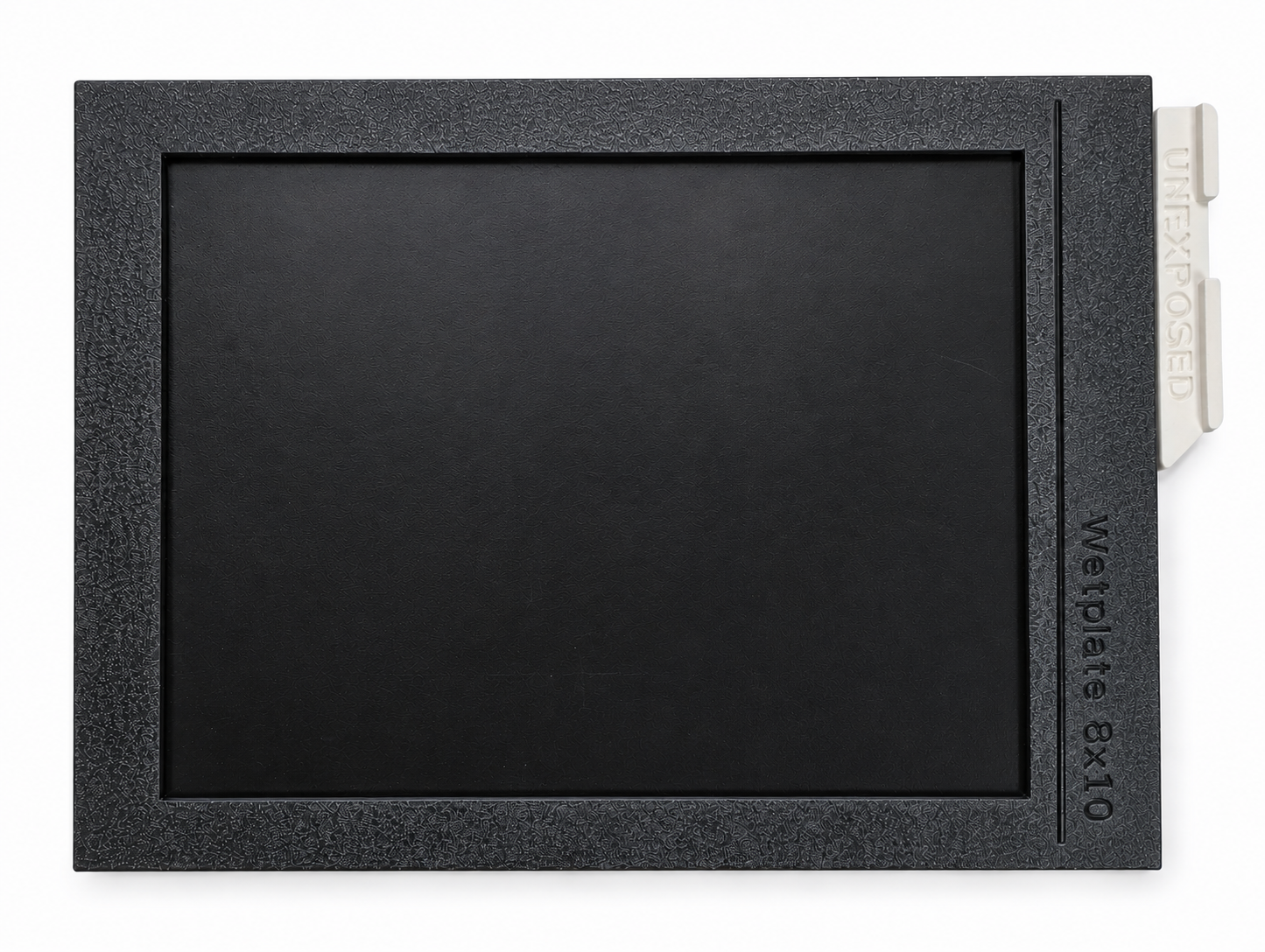
Wetplate Holder 8×10 MK4 by StenopeiKa
Wetplate Holder 8×10 MK4 — 560 g

1. Meno peso sulle spalle

Quando si prepara lo zaino per uscire con un banco ottico, ogni cosa sembra pesare poco… finché non le metti tutte insieme!

La nuova famiglia MK4 comprende tre formati, con questi pesi:

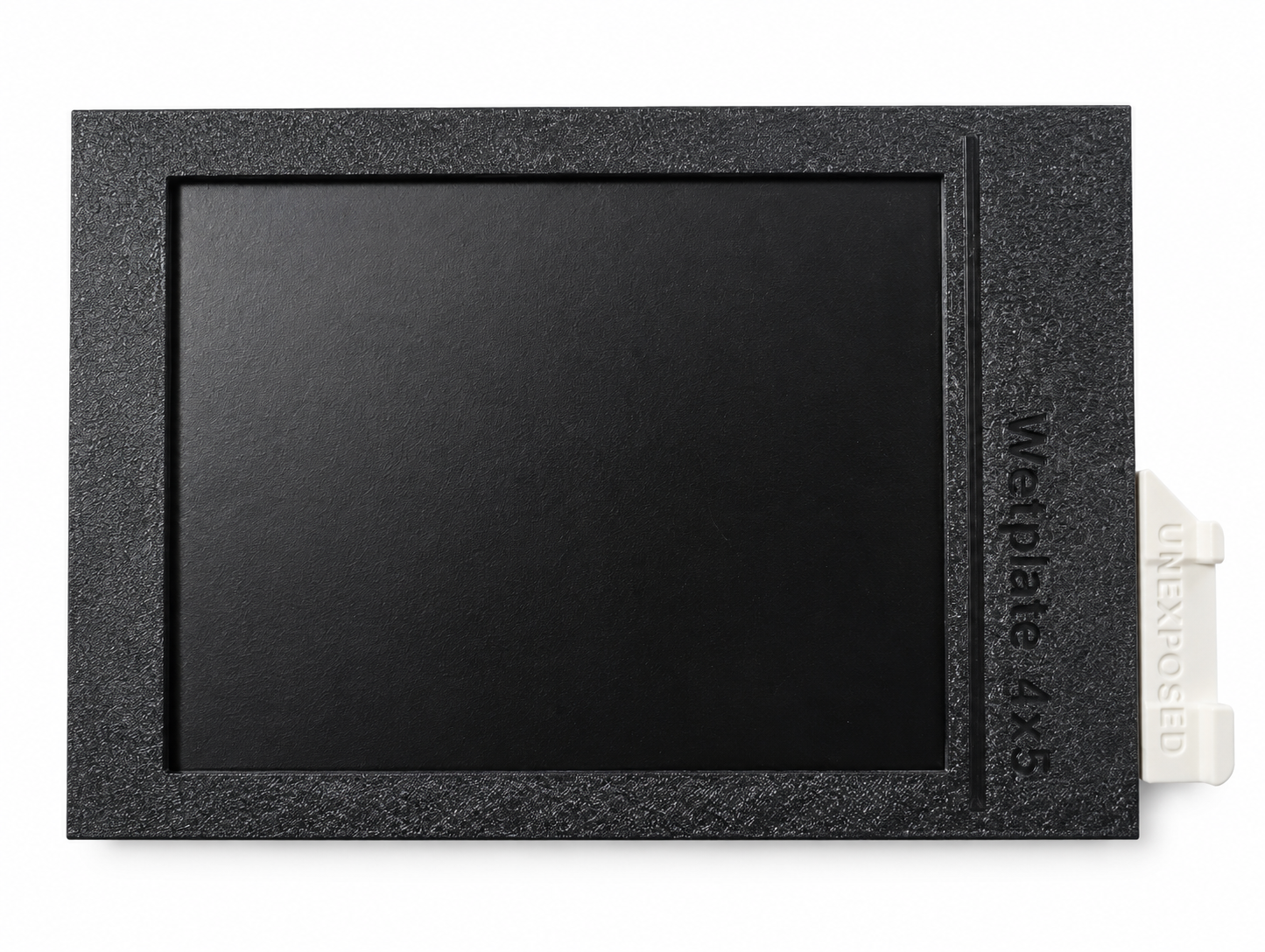
  • 4×5: 150 g
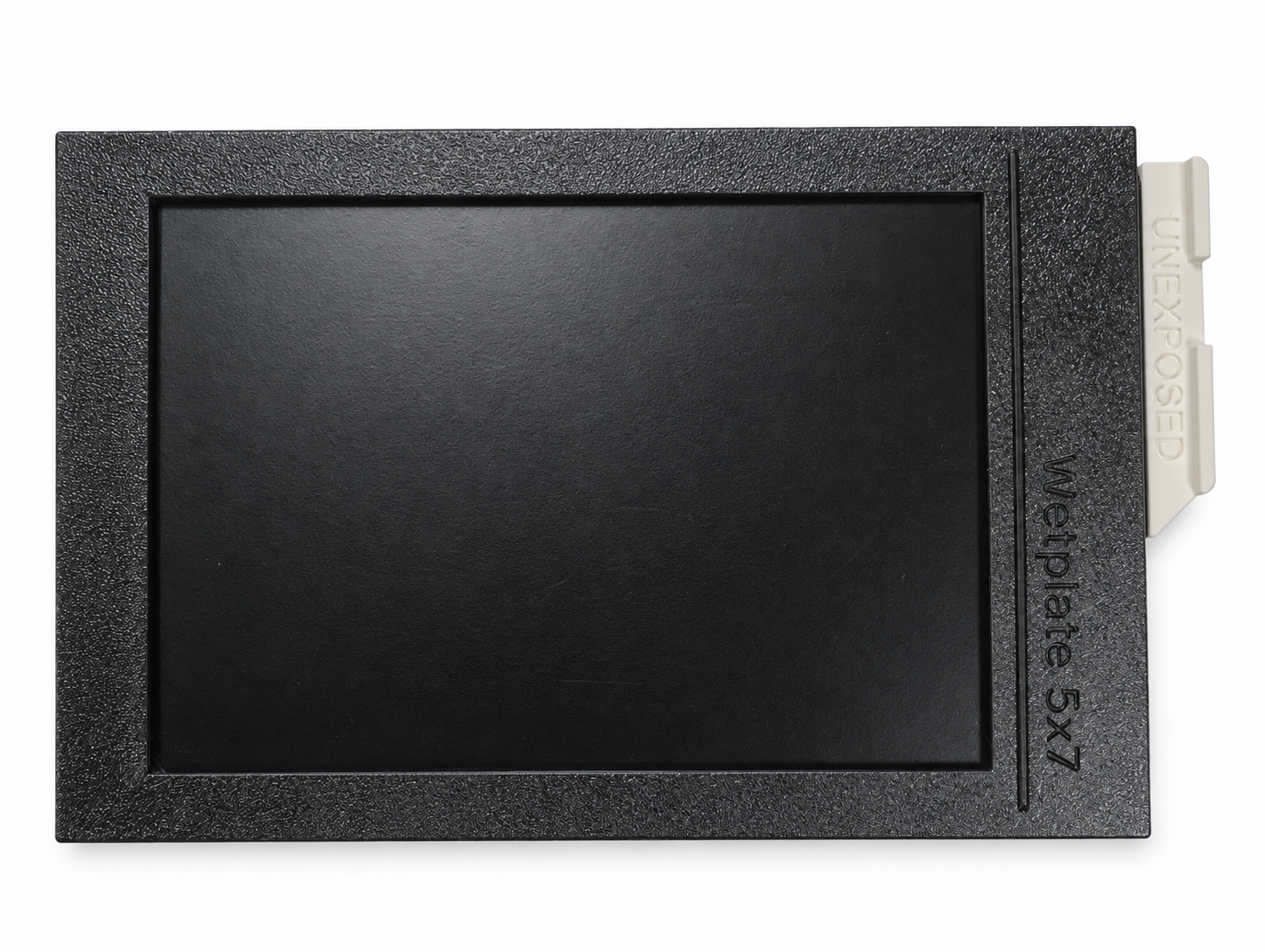
  • 5×7: 330 g
  • 8×10: 560 g

Dal piccolo 4×5 al grande 8×10, il peso dello chassis è una delle cose a cui ho prestato attenzione. Perché tra fotocamera, obiettivo, cavalletto e attrezzatura per il collodio, da portare in giro c’è già abbastanza!

👉 Scopri il Wetplate Holder 8×10 MK4

2. Tre giorni per partire

Negli ultimi anni le catene di approvvigionamento erano diventate sempre più una gimcana. E io preferisco passare il tempo a costruire cose piuttosto che a rincorrere i materiali!

Il nuovo sistema di produzione mi permette di organizzare il lavoro con maggiore autonomia e di preparare e spedire il tuo wetplate holder entro tre giorni dall’ordine.

Tu scegli il formato, io mi metto al lavoro.

1. Less weight on your shoulders

When you’re packing a view camera for a day out, every item seems light enough… until you put them all together!

The new MK4 family includes three formats, with the following weights:

  • 4×5: 150 g
  • 5×7: 330 g
  • 8×10: 560 g

From the compact 4×5 to the larger 8×10, the holder’s weight is something I’ve paid attention to. Between the camera, lens, tripod and collodion equipment, there’s already plenty to carry!

👉 Explore the Wetplate Holder 8×10 MK4

2. Ready to ship within three days

Over the last few years, sourcing materials has become quite an obstacle course. And I’d rather spend my time making things than chasing materials!

The new production process gives me more control over the workflow and lets me prepare and dispatch your wetplate holder within three days of your order.

You choose the format, I get to work.

Wetplate Holder 5×7 MK4 by StenopeiKa
Wetplate Holder 5×7 MK4 — 330 g

3. Costa meno. Parecchio meno.

La stampa 3D mi permette di ridurre i costi di produzione e di proporti i nuovi MK4 a un prezzo sensibilmente più basso rispetto alla versione in PVC e alluminio.

Un gradino più basso per entrare nella fotografia al collodio umido, oppure per aggiungere un altro formato a quelli che usi già.

Perché lo so come va a finire: si parte dal 4×5 e poi si comincia a guardare il 5×7… che con il collodio ha proprio il suo perché! 😁

👉 Scopri il Wetplate Holder 5×7 MK4

3. A lower price. A much lower price.

3D printing allows me to reduce production costs and offer the new MK4 holders at a significantly lower price than the PVC and aluminium version.

That makes getting into wet plate collodion photography more affordable, or makes it easier to add another format to the ones you already use.

Because I know how it goes: you start with 4×5, and then you find yourself looking at 5×7… which really does have a special charm when it comes to collodion! 😁

👉 Explore the Wetplate Holder 5×7 MK4

Wetplate Holder 4×5 MK4 by StenopeiKa
Wetplate Holder 4×5 MK4 — 150 g

Tre formati, lo stesso sistema

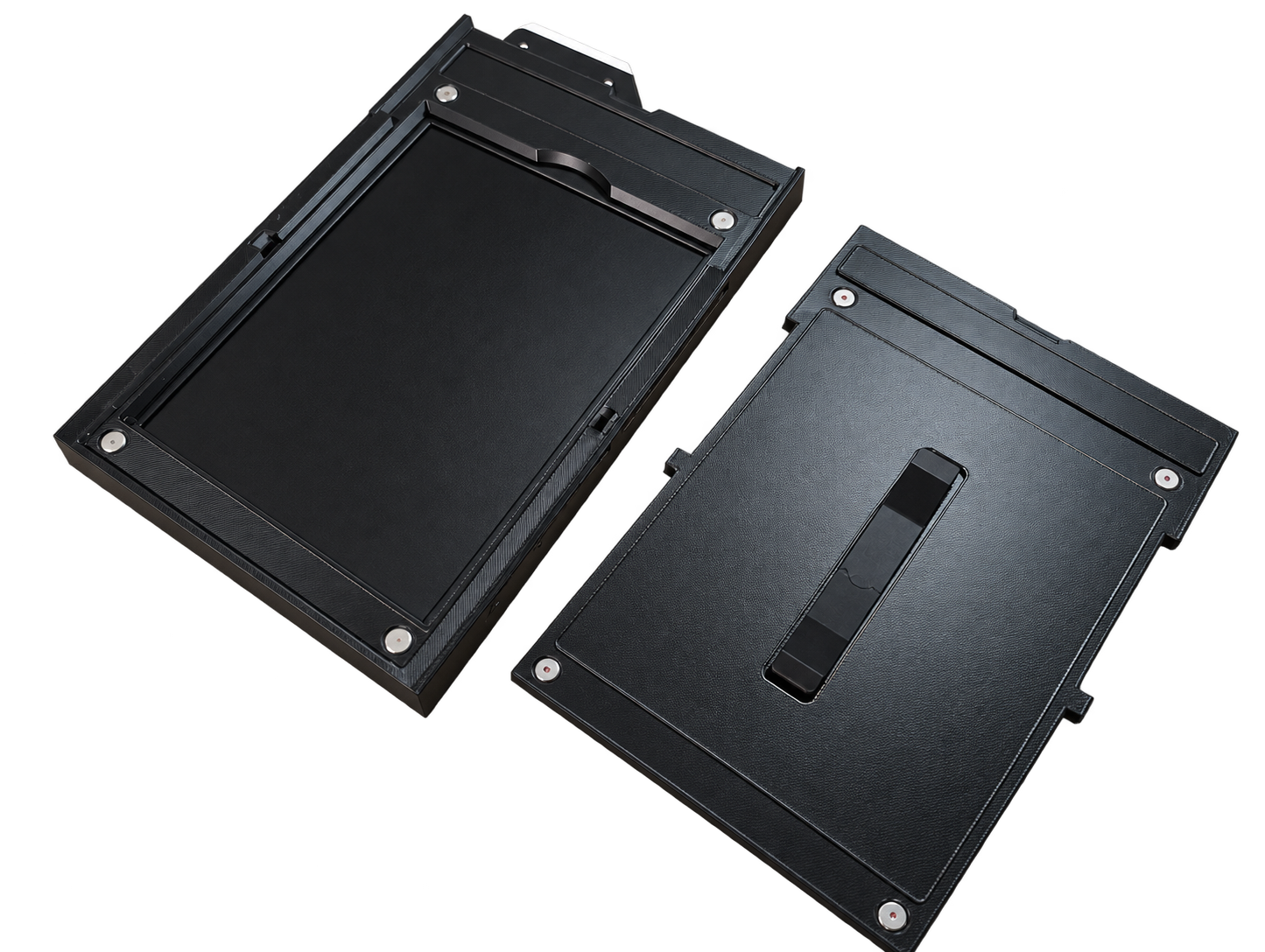
I nuovi Wetplate Holder MK4 sono disponibili nei formati 4×5, 5×7 e 8×10 e condividono lo stesso funzionamento: caricamento della lastra dal retro, molla di posizionamento e sportellino con chiusura magnetica.

Si apre, si inserisce la lastra e si richiude. Poi lo chassis va nel dorso della fotocamera, si estrae il volet e si scatta.

Le dimensioni esterne seguono quelle dei normali portapellicole del rispettivo formato, per l’utilizzo sui dorsi compatibili senza modificare la fotocamera.

Il piccolo di famiglia ha anche una chicca: il 4×5 può essere fissato con le linguette Graflok. Una possibilità in più!

👉 Scopri il Wetplate Holder 4×5 MK4

Three formats, the same system

The new Wetplate Holder MK4 family is available in 4×5, 5×7 and 8×10. All three share the same system: rear plate loading, a positioning spring and a magnetic rear cover.

Open the cover, insert your plate and close it again. Then fit the holder into your camera back, withdraw the dark slide and take your photograph.

The external dimensions follow those of standard film holders in the corresponding format, allowing use on compatible backs without modifying your camera.

The smallest member of the family has an extra feature too: the 4×5 can also be secured using Graflok sliders. One more option!

👉 Explore the Wetplate Holder 4×5 MK4

Interno del Wetplate Holder 4×5 MK4: sistema di caricamento posteriore / Inside the Wetplate Holder 4×5 MK4: rear-loading system
Il caricamento posteriore del 4×5 MK4 / The 4×5 MK4 rear-loading system

E se vuoi usare lastre più piccole?

Per i formati più grandi sono disponibili anche le riduzioni. Nel video ti mostro come utilizzare lastre 4×5 e 5×7 dentro il wetplate holder 8×10.

Si inserisce il riduttore, si carica la lastra e si richiude lo sportellino con il solito sistema magnetico.

Per toglierlo c’è anche il posto per il dito: perché le cose devono essere facili anche quando hai finito di scattare!

La versione in PVC e alluminio rimane

La chiamo “vecchia versione”, ma ci sono clienti che usano ancora i primi modelli dopo dieci anni e migliaia di lastre. Direi che si sono guadagnati il diritto di avere degli affezionati.

Per questo la versione in PVC e alluminio rimane disponibile su richiesta.

Adesso però basta scrivere: caricamento, sportellini e riduzioni si capiscono meglio vedendoli in funzione!

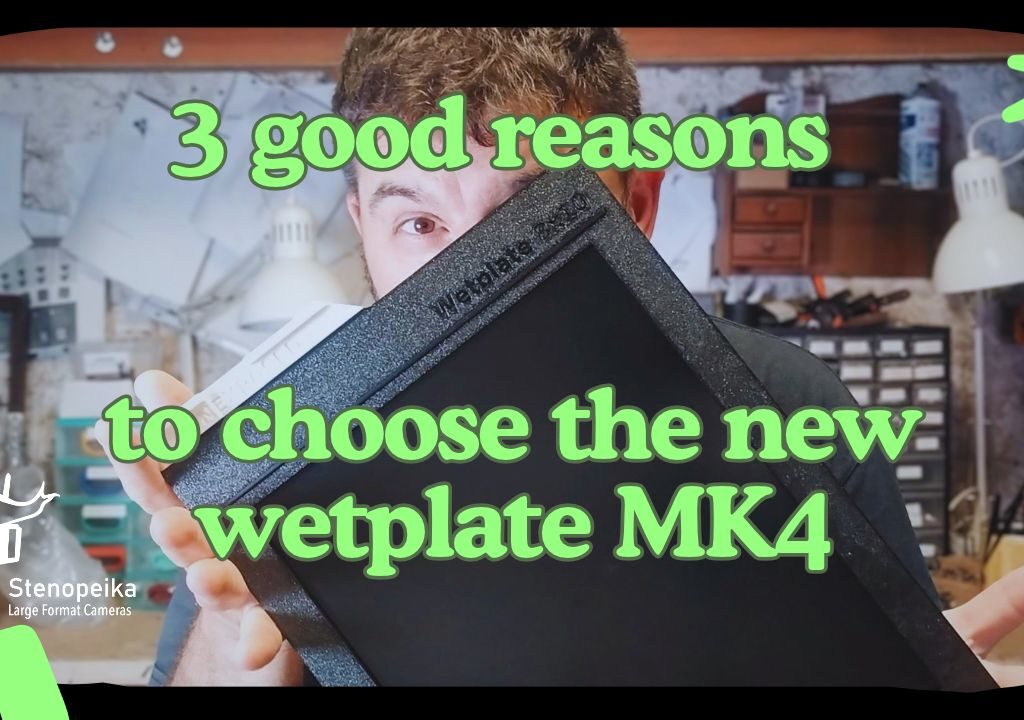
▶️ Guarda il video: 3 buone ragioni per scegliere i nuovi Wetplate MK4

What if you want to use smaller plates?

Reducing inserts are also available for the larger formats. In the video, I show you how to use 4×5 and 5×7 plates inside the 8×10 wetplate holder.

Fit the insert, load your plate and close the rear cover using the same magnetic system.

There’s even a finger recess to help you remove the insert: because things should still be easy once you’ve finished shooting!

The PVC and aluminium version stays

I call it the “old version”, but some customers are still using the earliest models after ten years and thousands of plates. I’d say those holders have earned a loyal following.

That’s why the PVC and aluminium version remains available on request.

But that’s enough writing: loading, rear covers and reducing inserts make much more sense when you see them working!

▶️ Watch the video: 3 Good Reasons to Choose the New Wetplate MK4

Vuoi ricevere le prossime novità dal laboratorio, i nuovi prodotti e i prossimi “Cosa bolle in pentola?”?

📬 Iscriviti alla newsletter StenopeiKa.

Io ti ringrazio, ti saluto e torno in laboratorio!

Samuele

StenopeiKa rende facili le cose difficili.

Would you like to receive workshop news, new product announcements and upcoming “What’s cooking?” updates?

📬 Join the StenopeiKa newsletter.

Thanks for reading. Back to the workshop!

Samuele

StenopeiKa makes difficult things easy.

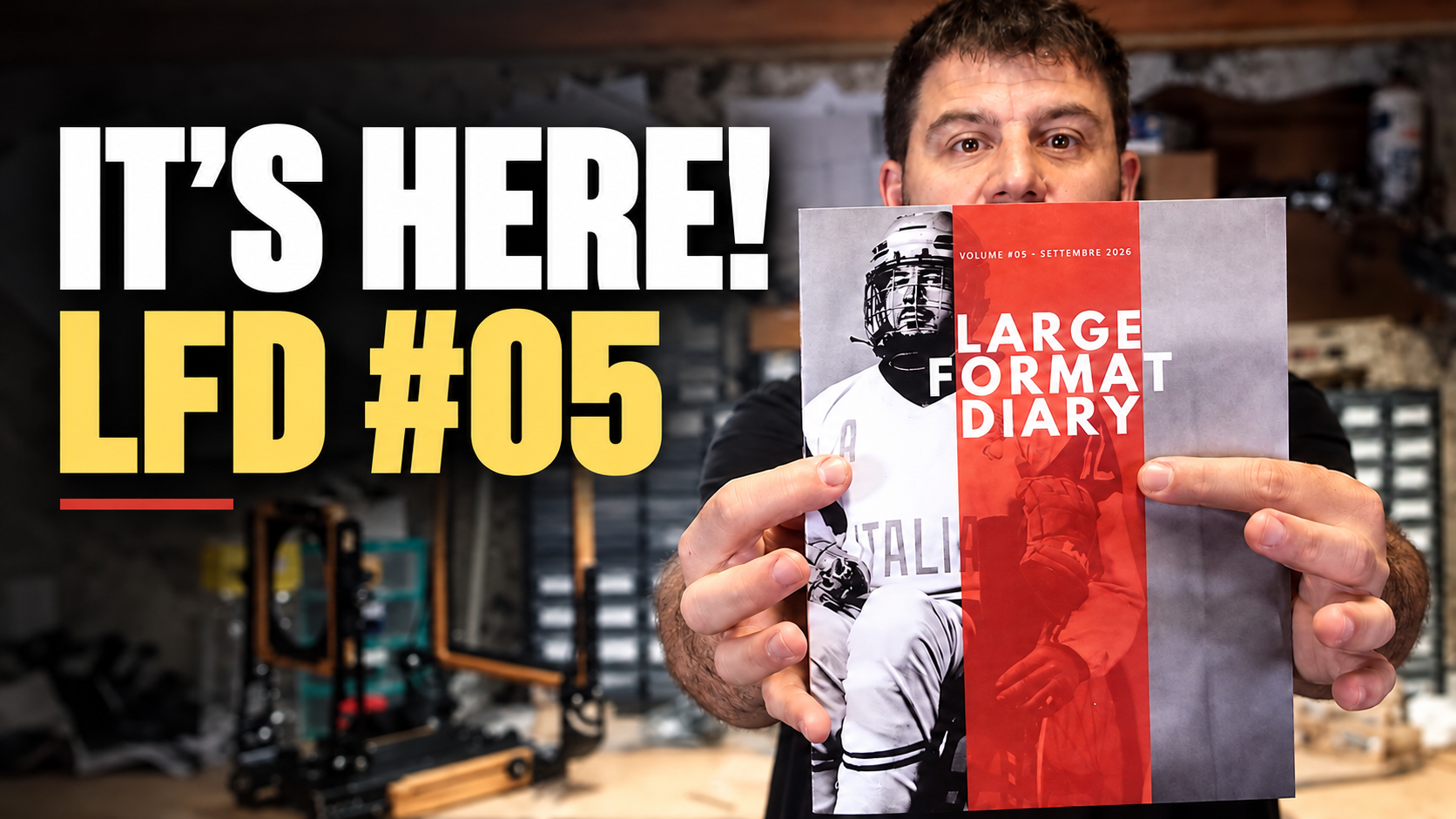
Large Format Diary #05 available!!!

Il numero 05 di Large Format Diary è arrivato! È il numero di settembre 2026, anche se ve lo presento a ottobre: siamo andati un po’ lunghi, ma finalmente possiamo sfogliarlo insieme.

Nel nuovo video vi accompagno tra le pagine della rivista, mostrando le fotografie e presentando gli articoli. Come sempre ci sono progetti, esperienze e riflessioni legate al grande formato; questa volta trovate anche due approfondimenti tecnici, dedicati agli obiettivi grandangolari e all’uso dei filtri nella fotografia in bianco e nero.

A dare il respiro visivo a questo numero è Sabrina Losso, con i suoi ritratti di atleti paralimpici realizzati al collodio umido in formato 8×10”. Le sue fotografie accompagnano la lettura tra un articolo e l’altro, con immagini presentate sulla doppia pagina.

Alberto Lagomaggiore ci guida tra caratteristiche, peculiarità e possibilità d’impiego degli obiettivi grandangolari nel grande formato. Paolo Mazzo ci porta invece dentro la fotografia industriale, attraverso un racconto di luoghi e strutture che va oltre la semplice documentazione.

Torna la rubrica di Fabio Boni dedicata ai libri fotografici: questa volta sulle sue pagine troviamo Tokyo di Gerry Johansson e Grays the Mountain Sends di Bryan Schutmaat.

Con Giulio Speranza affrontiamo una domanda importante per chi vorrebbe cominciare: come si impara a usare il banco ottico e come si trova qualcuno che sappia insegnarcelo? Un articolo che ho voluto fortemente, perché il grande formato può intimorire chi lo guarda per la prima volta.

In L’inganno dell’argento, Armando Moneta spiega che cosa succede quando utilizziamo i filtri nella fotografia in bianco e nero. Nick Davis ci racconta invece la sua avventura con il formato panoramico 7×17”, tra tentativi, inconvenienti e scoperte.

Debutta anche Focus mostre, con tre proposte che io e Paolo andremmo volentieri a vedere. Nelle ultime pagine ritrovate inoltre la selezione dei libri fotografici e i riferimenti agli autori, alle fotocamere e alle tecniche.

Large Format Diary è una rivista semestrale, disponibile in edizione italiana e inglese. Potete scegliere la versione cartacea oppure quella digitale, sfogliabile sul sito e non scaricabile.

Le copie destinate agli abbonati sono già state spedite. Se volete scoprire questo numero e scegliere la vostra versione, trovate tutti i dettagli nella pagina prodotto.

👉 Scopri e acquista Large Format Diary #05

Per ricevere i prossimi video, le novità dal laboratorio e gli aggiornamenti di Cosa bolle in pentola?, potete iscrivervi alla newsletter.

📩 Iscriviti alla newsletter StenopeiKa

Buona visione e buona lettura!
Samuele

Large Format Diary issue 05 is here! This is the September 2026 issue, even though I’m presenting it in October. It has taken a little longer than planned, but we can finally leaf through it together.

In the new video, I take you through the magazine, showing the photographs and introducing the articles. As always, you’ll find projects, first-hand experiences, and reflections on large format photography. This issue also includes two technical features, covering wide-angle lenses and the use of filters in black-and-white photography.

Our featured photographer is Sabrina Losso, whose portraits of Paralympic athletes were made using the wet plate collodion process in the 8×10” format. Her photographs set the visual rhythm of the issue, appearing across double-page spreads between the articles.

Alberto Lagomaggiore explores the characteristics, distinctive qualities, and practical uses of wide-angle lenses in large format photography. Paolo Mazzo takes us inside industrial photography, telling stories through spaces and structures in a way that goes beyond straightforward documentation.

Fabio Boni’s photobook column returns with Tokyo by Gerry Johansson and Grays the Mountain Sends by Bryan Schutmaat.

With Giulio Speranza, we address an important question for anyone thinking of getting started: how do you learn to use a view camera, and how do you find someone who can teach you? This is an article I particularly wanted to include, because large format can feel intimidating when you first encounter it.

Armando Moneta explains what happens when we use filters in black-and-white photography. Nick Davis shares his adventures with the panoramic 7×17” format, complete with experiments, setbacks, and discoveries.

Our new Focus exhibitions section introduces three exhibitions Paolo and I would happily visit. The closing pages also bring together a selection of photobooks and references to the contributors, cameras, and techniques.

Large Format Diary is published twice a year, with Italian and English editions. You can choose a printed copy or a digital edition to browse on our website. The digital edition is not downloadable.

Subscribers’ copies have already been shipped. To explore this issue and choose your preferred format, visit the product page.

👉 Discover and buy Large Format Diary #05

To receive upcoming videos, news from the workshop, and updates from Cosa bolle in pentola?, sign up for the newsletter.

📩 Subscribe to the StenopeiKa newsletter

Enjoy the video and happy reading!
Samuele

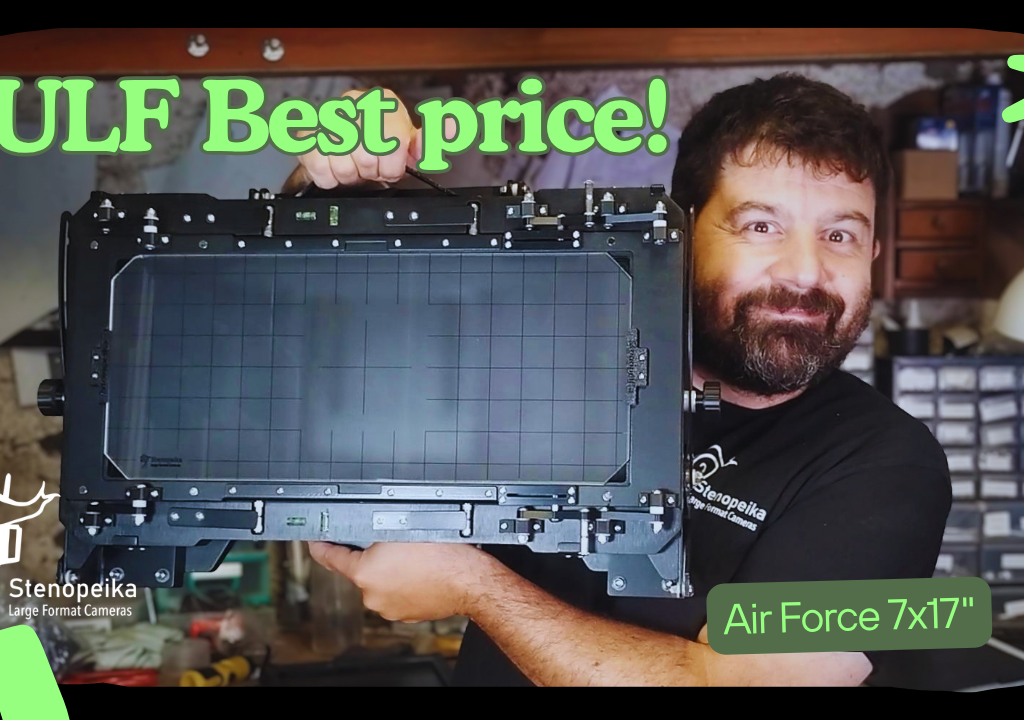
⚠️ULF Best Price⚠️ Air Force 7×17

Air Force 7×17 — Making Ultra Large Format Easier

The original goal for 2026 was simple: make ultra large format photography more accessible.

The Air Force 7×17 continues exactly in that direction.

Despite its impressive negative size, the camera remains lightweight, compact and practical in the field.

  • Full front and rear movements
  • Fast front focusing
  • Rear precision focusing
  • 6×6" lens board compatibility
  • Assisted film holder insertion

Learn more here:

Air Force 7×17 Product Page

Stay updated:

Newsletter

Air Force 7×17 — Rendere più semplice l'Ultra Grande Formato

L'obiettivo del 2026 era semplice: rendere l'ultra grande formato più accessibile.

La Air Force 7×17 prosegue esattamente in questa direzione.

Nonostante le dimensioni del negativo, la fotocamera rimane leggera, compatta e pratica da utilizzare sul campo.

  • Movimenti completi anteriori e posteriori
  • Messa a fuoco rapida sul frontale
  • Messa a fuoco di precisione sul posteriore
  • Compatibilità con piastra 6×6"
  • Inserimento assistito del portapellicola

Scopri di più qui:

Pagina prodotto Air Force 7×17

Rimani aggiornato:

Newsletter

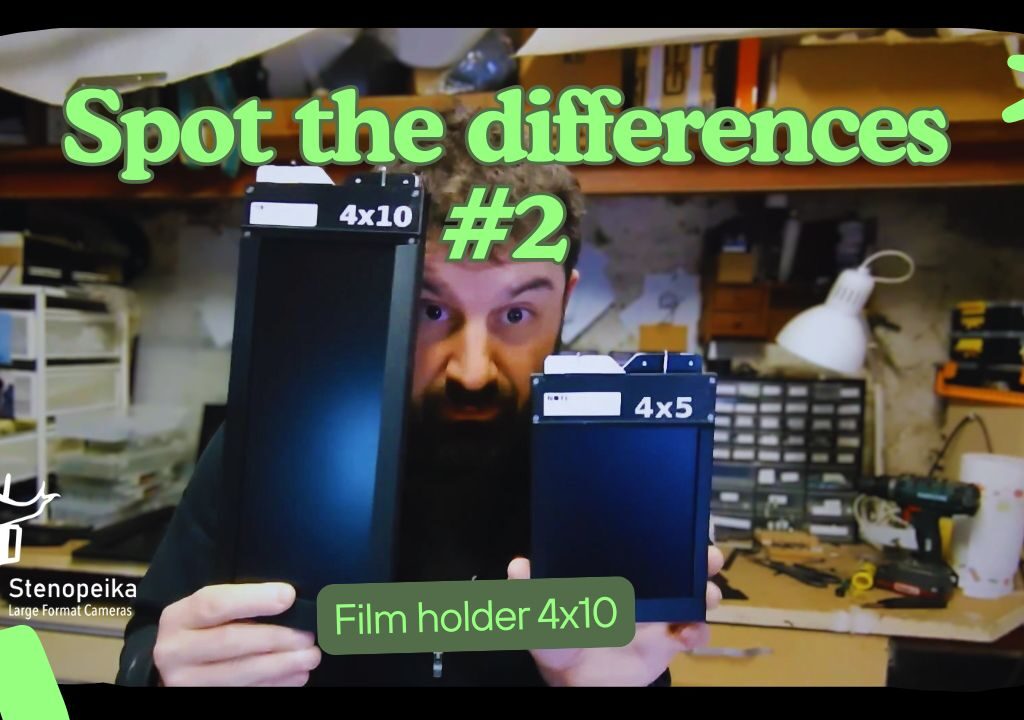
The problem is not only the cameras – film holder 4×10 mk3

The problem is not only the cameras

Over the last years, large format photography has slowly started coming back into the conversation.

New cameras. New photographers approaching the format. New interest around panoramic and ultra large formats.

But there is a problem that is discussed far less often: a camera alone is not enough.

Because the real issue is not simply finding a camera.

The real issue is being able to actually use it.

The ecosystem problem

Many large format and panoramic formats still survive almost entirely through the used market.

That means decades-old accessories, worn film holders, bent dark slides, inconsistent tolerances and, in some cases, prices that make no sense anymore.

And this becomes even more evident once you move beyond traditional formats.

4x10, 7x17, 11x14, 12x20, 14x17…

Formats that still exist, but often only if you are willing to spend months searching for old equipment.

Why I started making film holders

This is one of the reasons why I started producing new film holders alongside the cameras.

Not as collector objects.

But as tools meant to be used.

Over the last months, the lineup kept growing:

  • 7x17
  • 11x14
  • 12x20
  • 14x17
  • 4x5 MK3
  • and now the new 4x10 MK3

And yes, the next one will be the 8x10.

New vs old

There is a huge difference between choosing vintage equipment because you love it… and being forced to rely only on vintage equipment because no modern alternatives exist.

Large format photography should not survive only through leftovers.

It should remain usable today.

The new 4x10 MK3

The new Film Holder 4x10 MK3 was born exactly from this idea.

Not as a display piece.

But as a real tool for photographers who actually shoot 4x10.

Watch the video below and take a look at the product page.

→ Film Holder 4x10 MK3

→ Join the newsletter

Il problema non sono solo le fotocamere

Negli ultimi anni la fotografia grande formato è lentamente tornata a far parlare di sé.

Nuove fotocamere. Nuovi fotografi che si avvicinano al formato. Nuovo interesse verso i formati panoramici e ultra large format.

Ma c’è un problema di cui si parla molto meno: una fotocamera da sola non basta.

Perché il vero problema non è soltanto trovare una fotocamera.

Il vero problema è riuscire a usarla davvero.

Il problema dell’ecosistema

Molti formati grande formato e panoramici sopravvivono ancora quasi esclusivamente grazie al mercato dell’usato.

Questo significa accessori vecchi di decenni, chassis consumati, volet piegati, tolleranze variabili e, in certi casi, prezzi che ormai non hanno più senso.

E questo diventa ancora più evidente appena si esce dai formati tradizionali.

4x10, 7x17, 11x14, 12x20, 14x17…

Formati che esistono ancora, ma spesso solo se si è disposti a passare mesi a cercare materiale usato.

Perché ho iniziato a produrre porta pellicole

Questo è uno dei motivi per cui ho iniziato a produrre nuovi porta pellicole assieme alle fotocamere.

Non come oggetti da collezione.

Ma come strumenti pensati per essere usati davvero.

Negli ultimi mesi la linea si è ampliata progressivamente:

  • 7x17
  • 11x14
  • 12x20
  • 14x17
  • 4x5 MK3
  • e adesso anche il nuovo 4x10 MK3

E sì, il prossimo sarà l’8x10.

Nuovo contro usato

Esiste una differenza enorme tra scegliere volontariamente uno strumento vintage perché lo si ama… ed essere obbligati a usare soltanto strumenti vintage perché non esistono alternative moderne.

La fotografia grande formato non dovrebbe sopravvivere soltanto attraverso ciò che è rimasto.

Dovrebbe continuare a essere utilizzabile oggi.

Il nuovo 4x10 MK3

Il nuovo Film Holder 4x10 MK3 nasce esattamente da questa idea.

Non come pezzo da esposizione.

Ma come vero strumento per chi fotografa realmente in 4x10.

Guarda il video qui sotto e dai un’occhiata alla pagina prodotto.

→ Film Holder 4x10 MK3

→ Iscriviti alla newsletter

New vs used – (and the answer isn’t that obvious)

Ti faccio risparmiare tempo.

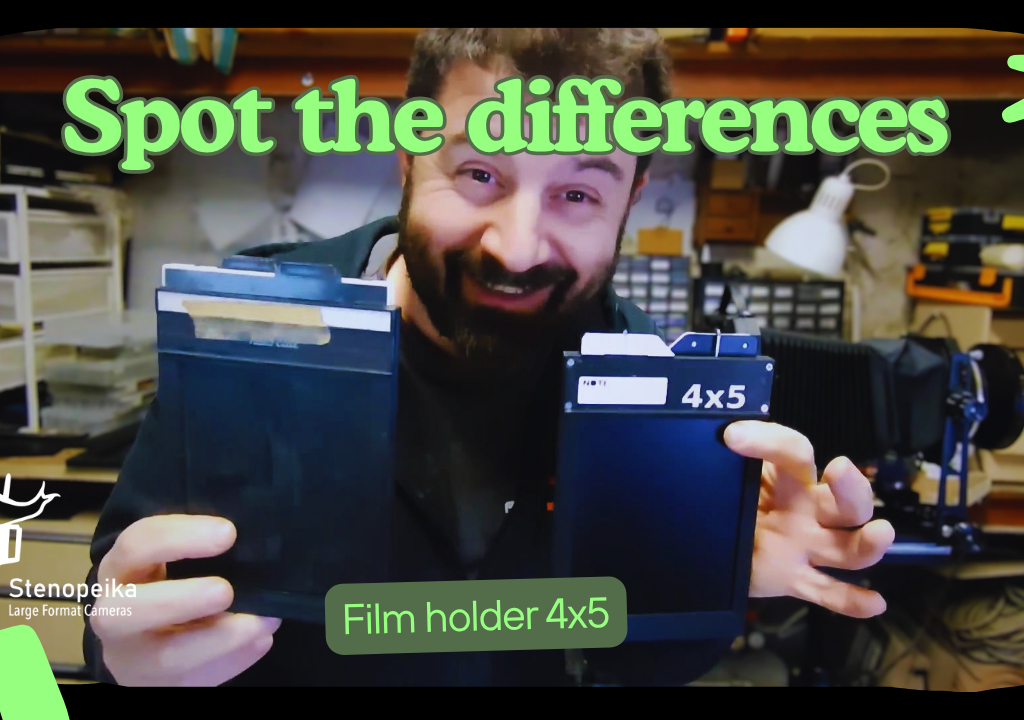
Un portapellicola 4x5 nuovo, accanto a un classico Fidelity.

Stesso formato.
Stessa compatibilità.
Stessa funzione.

La differenza?

Uno ha 30–40 anni di utilizzo.
L’altro è appena stato assemblato.

E il prezzo è praticamente lo stesso.

A questo punto la domanda è semplice:

perché continuare a comprare usato?

Scopri il Film Holder 4x5 MK3

Iscriviti alla newsletter

Let me save you time.

A brand new 4x5 film holder next to a classic Fidelity.

Same format.
Same compatibility.
Same function.

The difference?

One has 30–40 years of use.
The other has just been assembled.

And the price is basically the same.

So the real question is:

why keep buying used?

Discover the 4x5 Film Holder MK3

Join the newsletter

Large Format Diary #04 – Now also digital

Large Format Diary #04 – Now also digital

Large format can be just a camera.
Or it can become a language.

Issue #04 of Large Format Diary is built exactly in that space.

This issue focuses on portraiture, explored through very different techniques:

  • Large format film (Octavian Bâlea)
  • Wet plate collodion and direct positive (Engelbert Visscher)
  • Instant analog portraiture (Zu Studio)
  • Digital on a view camera (Paolo Castiglioni)

Alongside this, two works expand the direction:

  • Graham Cassano – mixed technique
  • Paolo Mazzo – color pinhole project on the Drina bridge

Starting from this issue, there is also a new section:

The weight of seeing, curated by Fabio Boni,
focused on large format photobooks.
In this issue: Avedon and Deana Lawson.

And there is one important change.

For the first time, Large Format Diary is available both as a printed magazine and as a digital flip-through version directly on the website.

No waiting.
No shipping.
Just open and browse.

📖 Discover issue #04:
https://www.stenopeika.com/product/large-format-diary-04-march-2026/

Large Format Diary #04 – Ora anche digitale

Il grande formato può essere una macchina.
Oppure può diventare un linguaggio.

Il numero #04 di Large Format Diary nasce esattamente in questo passaggio.

Questo numero è costruito attorno al ritratto, visto attraverso tecniche molto diverse:

  • Pellicola in grande formato (Octavian Bâlea)
  • Collodio umido e diretto positivo (Engelbert Visscher)
  • Ritratto analogico istantaneo (Zu Studio)
  • Digitale su banco ottico (Paolo Castiglioni)

Accanto a questo, due lavori ampliano la direzione:

  • Graham Cassano – tecnica mista
  • Paolo Mazzo – progetto a colori a foro stenopeico sul ponte della Drina

Da questo numero parte anche una nuova rubrica:

Il peso dello sguardo, curata da Fabio Boni,
dedicata ai libri fotografici in grande formato.
In questo numero: Avedon e Deana Lawson.

E c’è un cambiamento importante.

Per la prima volta, Large Format Diary è disponibile sia in formato cartaceo che in formato digitale sfogliabile direttamente dal sito.

Niente attese.
Niente spedizioni.
Apri e sfogli.

📖 Scopri il numero #04:
https://www.stenopeika.com/product/large-format-diary-04-march-2026/