The problem is not only the cameras – film holder 4×10 mk3

The problem is not only the cameras

Over the last years, large format photography has slowly started coming back into the conversation.

New cameras. New photographers approaching the format. New interest around panoramic and ultra large formats.

But there is a problem that is discussed far less often: a camera alone is not enough.

Because the real issue is not simply finding a camera.

The real issue is being able to actually use it.

The ecosystem problem

Many large format and panoramic formats still survive almost entirely through the used market.

That means decades-old accessories, worn film holders, bent dark slides, inconsistent tolerances and, in some cases, prices that make no sense anymore.

And this becomes even more evident once you move beyond traditional formats.

4x10, 7x17, 11x14, 12x20, 14x17…

Formats that still exist, but often only if you are willing to spend months searching for old equipment.

Why I started making film holders

This is one of the reasons why I started producing new film holders alongside the cameras.

Not as collector objects.

But as tools meant to be used.

Over the last months, the lineup kept growing:

  • 7x17
  • 11x14
  • 12x20
  • 14x17
  • 4x5 MK3
  • and now the new 4x10 MK3

And yes, the next one will be the 8x10.

New vs old

There is a huge difference between choosing vintage equipment because you love it… and being forced to rely only on vintage equipment because no modern alternatives exist.

Large format photography should not survive only through leftovers.

It should remain usable today.

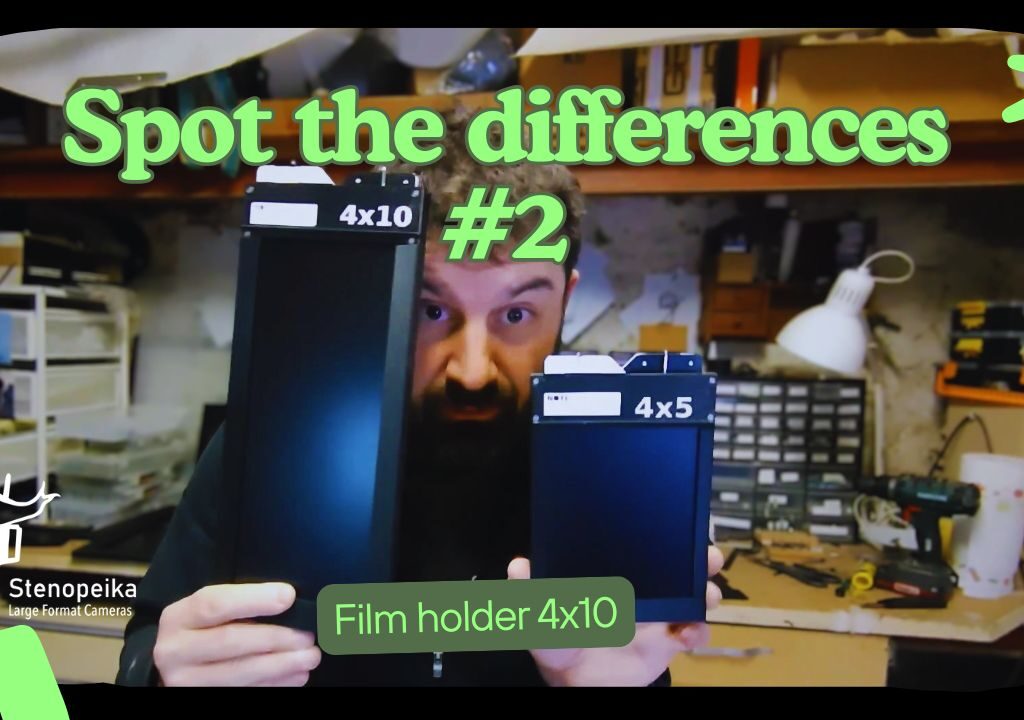
The new 4x10 MK3

The new Film Holder 4x10 MK3 was born exactly from this idea.

Not as a display piece.

But as a real tool for photographers who actually shoot 4x10.

Watch the video below and take a look at the product page.

→ Film Holder 4x10 MK3

→ Join the newsletter

Il problema non sono solo le fotocamere

Negli ultimi anni la fotografia grande formato è lentamente tornata a far parlare di sé.

Nuove fotocamere. Nuovi fotografi che si avvicinano al formato. Nuovo interesse verso i formati panoramici e ultra large format.

Ma c’è un problema di cui si parla molto meno: una fotocamera da sola non basta.

Perché il vero problema non è soltanto trovare una fotocamera.

Il vero problema è riuscire a usarla davvero.

Il problema dell’ecosistema

Molti formati grande formato e panoramici sopravvivono ancora quasi esclusivamente grazie al mercato dell’usato.

Questo significa accessori vecchi di decenni, chassis consumati, volet piegati, tolleranze variabili e, in certi casi, prezzi che ormai non hanno più senso.

E questo diventa ancora più evidente appena si esce dai formati tradizionali.

4x10, 7x17, 11x14, 12x20, 14x17…

Formati che esistono ancora, ma spesso solo se si è disposti a passare mesi a cercare materiale usato.

Perché ho iniziato a produrre porta pellicole

Questo è uno dei motivi per cui ho iniziato a produrre nuovi porta pellicole assieme alle fotocamere.

Non come oggetti da collezione.

Ma come strumenti pensati per essere usati davvero.

Negli ultimi mesi la linea si è ampliata progressivamente:

  • 7x17
  • 11x14
  • 12x20
  • 14x17
  • 4x5 MK3
  • e adesso anche il nuovo 4x10 MK3

E sì, il prossimo sarà l’8x10.

Nuovo contro usato

Esiste una differenza enorme tra scegliere volontariamente uno strumento vintage perché lo si ama… ed essere obbligati a usare soltanto strumenti vintage perché non esistono alternative moderne.

La fotografia grande formato non dovrebbe sopravvivere soltanto attraverso ciò che è rimasto.

Dovrebbe continuare a essere utilizzabile oggi.

Il nuovo 4x10 MK3

Il nuovo Film Holder 4x10 MK3 nasce esattamente da questa idea.

Non come pezzo da esposizione.

Ma come vero strumento per chi fotografa realmente in 4x10.

Guarda il video qui sotto e dai un’occhiata alla pagina prodotto.
→ Film Holder 4x10 MK3

→ Iscriviti alla newsletter

New vs used – (and the answer isn’t that obvious)

Ti faccio risparmiare tempo.

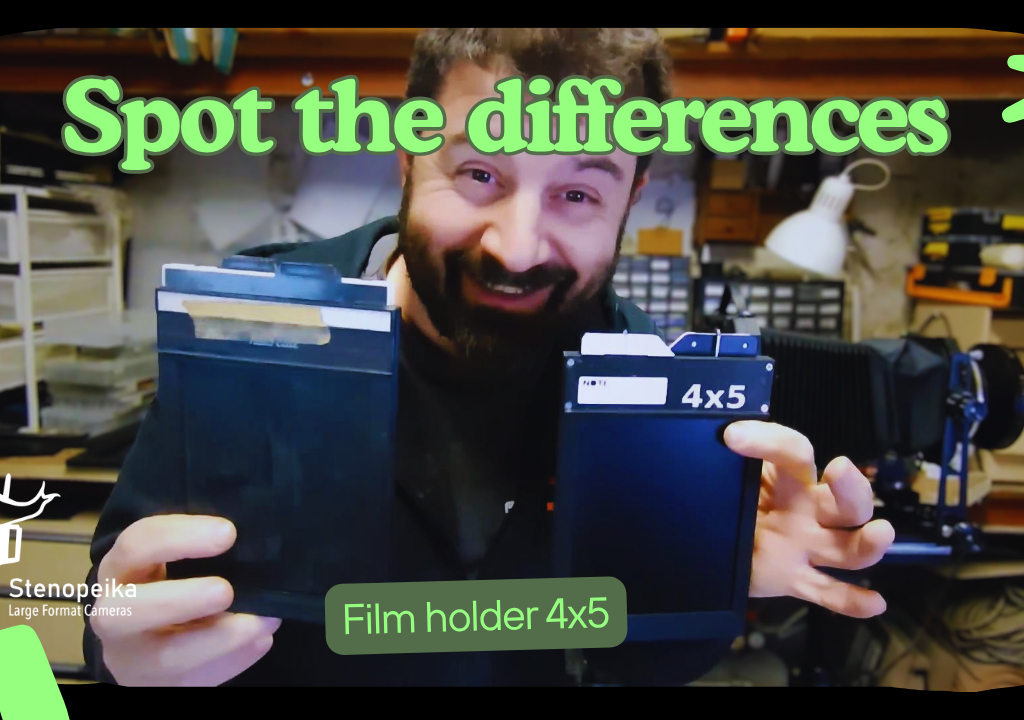
Un portapellicola 4x5 nuovo, accanto a un classico Fidelity.

Stesso formato.
Stessa compatibilità.
Stessa funzione.

La differenza?

Uno ha 30–40 anni di utilizzo.
L’altro è appena stato assemblato.

E il prezzo è praticamente lo stesso.

A questo punto la domanda è semplice:

perché continuare a comprare usato?

Scopri il Film Holder 4x5 MK3

Iscriviti alla newsletter

Let me save you time.

A brand new 4x5 film holder next to a classic Fidelity.

Same format.
Same compatibility.
Same function.

The difference?

One has 30–40 years of use.
The other has just been assembled.

And the price is basically the same.

So the real question is:

why keep buying used?

Discover the 4x5 Film Holder MK3

Join the newsletter

Focus without a dark cloth

Focus Without a Dark Cloth

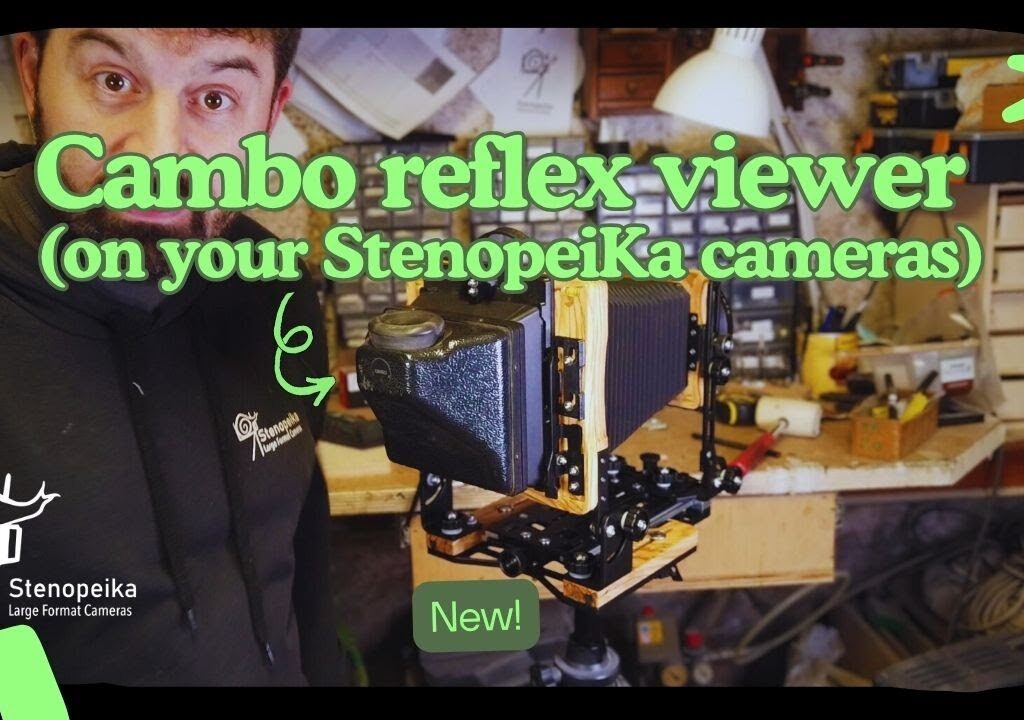
This new Cambo Viewer adapter for the Michelangelo 4x5 MK2 allows you to focus quickly and comfortably without using a traditional dark cloth.

Designed for photographers using long focal lengths (even 400mm), it features a magnetic mounting system that is fast, stable and completely reversible.

  • Magnetic locking system
  • Vertical and horizontal use
  • Compatible with rotating back
  • No permanent modification required

Available for Michelangelo 4x5 MK2 and on request for Caronte, ICS, Air Force and Archi-mede.

📩 Subscribe to the newsletter:
https://www.stenopeika.com/i-want-to-be-updated/

Mettere a fuoco senza panno nero

Questo adattatore per visore Cambo consente di utilizzare il viewer direttamente sulla Michelangelo 4x5 MK2.

Ideale per chi utilizza focali lunghe e vuole velocizzare la messa a fuoco in esterno, grazie a un sistema magnetico rapido e stabile.

  • Sistema magnetico di bloccaggio
  • Utilizzo verticale e orizzontale
  • Compatibile con dorso ruotabile
  • Nessuna modifica permanente

Disponibile per Michelangelo 4x5 MK2 e su richiesta per Caronte, ICS, Air Force e Archi-mede.

📩 Iscriviti alla newsletter:
https://www.stenopeika.com/i-want-to-be-updated/

The “monster” is here: Minutero 2.0 PRO 12×20″

Minutero 2.0 PRO 12x20" — Direct Positive In-Camera

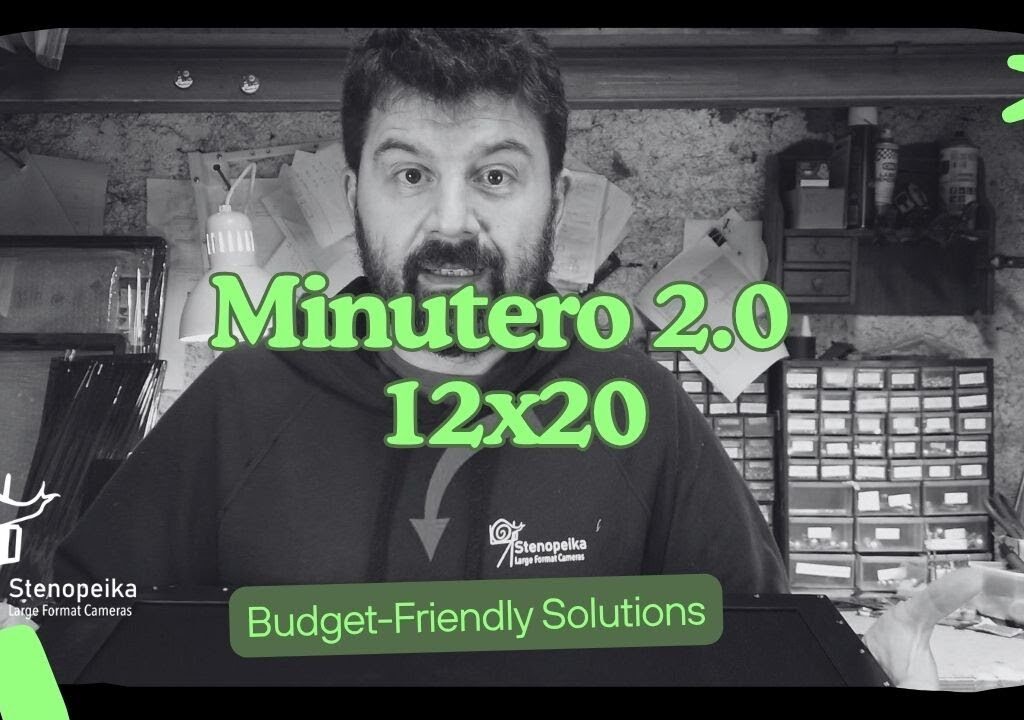
The “monster” is here: Minutero 2.0 PRO 12x20".

A professional chassis that lets you develop photographic paper directly inside your large format camera, creating direct positives in ultra large format—without a darkroom.

  • Designed for paper workflows (B&W and color reversal kits exist).
  • Includes a focusing spacer to compensate the paper plane difference.

Important: Minutero is an in-camera developing tray, not a fully sealed developing tank. Use it with care and a practical setup (especially when pouring chemistry).

Product page: https://www.stenopeika.com/product/minutero-2-0-12x20-direct-positive-in-camera/
Newsletter: https://www.stenopeika.com/i-want-to-be-updated/
maseiinverso? (B&W reversal kit): https://www.stenopeika.com/product/maseiinverso-black-and-white-paper-reversal-kit/
YouTube video: https://youtu.be/9pibbWJMDj8

Minutero 2.0 PRO 12x20" — Positivo diretto in-camera

È arrivato “il mostro”: Minutero 2.0 PRO 12x20".

Uno chassis professionale che ti permette di sviluppare carta fotografica direttamente in-camera, ottenendo positivi diretti in ultra grande formato—senza camera oscura.

  • Pensato per lavorare su carta (esistono kit di inversione B/N e colore).
  • Include il distanziale di messa a fuoco per compensare la differenza del piano carta.

Nota: il Minutero è una vaschetta evoluta in-camera, non una tank sigillata. Serve un’impostazione pratica e attenzione quando versi la chimica.

Pagina prodotto: https://www.stenopeika.com/product/minutero-2-0-12x20-direct-positive-in-camera/
Newsletter: https://www.stenopeika.com/i-want-to-be-updated/
maseiinverso? (kit inversione B/N): https://www.stenopeika.com/product/maseiinverso-black-and-white-paper-reversal-kit/
Video YouTube: https://youtu.be/9pibbWJMDj8

7×17? monster but affordable – A new panoramic ULF format

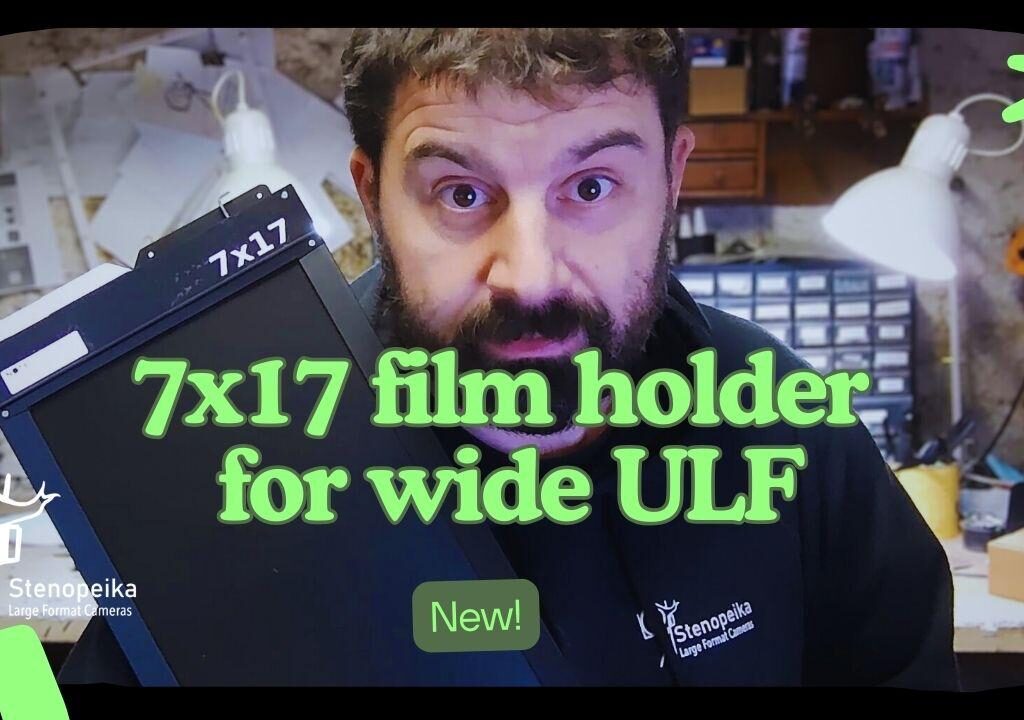
If ULF “monsters” like 11×14 and 12×20 weren’t enough, here comes a new panoramic creature: the 7×17 film holder in PLA+ with double aluminum darkslides. A long, skinny holder that turns Ultra Large Format into a very different way of seeing.

Why 7×17 panoramic ULF matters

7×17 is a strange beast: big enough to be ULF in practice, but with a panoramic aspect ratio that forces you to rethink composition, horizon lines and where you place your subject. It’s also more manageable in trays and darkroom space than even larger formats like 12×20.

The new 7×17 film holder

The holder is built in PLA+, designed to stay light and robust, and it is double-sided with two aluminum darkslides. It’s meant to be used, not just admired on a shelf.

Compatibility: 7×17 / 14×17 “dancing standards”

The real challenge is not passion, it’s standards. The 7×17 / 14×17 world is full of slightly different external dimensions for backs and holders. Film size is fixed, but cameras are not always speaking exactly the same language.

https://youtu.be/vKSF_Dol6nc

That’s why checking your camera back dimensions is essential. If your back does not match the most common standards, I can adapt the holder to your specific measurements or even work from a sample holder.

How to feed a 7×17 holder

Film availability in Europe is limited, but there are realistic options:

  • 7×17 / 14×17 sheet film from US suppliers – still a practical route if you’re willing to import.
  • X-ray film – widely available in sizes like 11×14 and 14×17; cut a 14×17 sheet in half and you get two 7×17 sheets (with the usual caveats about contrast and double-sided emulsion).
  • Photographic paper + reversal kits – B&W with “maseiinverso?” and color with “maseidaltonico?”, for direct positives on paper in 7×17 as well.

Cameras and ecosystem

If you don’t have a 7×17 camera yet, I can build one on request, both in Air Force and Rinascimentale style, so the holder becomes part of a coherent ULF ecosystem (cameras, holders, reversal kits).

Watch the video & useful links

🎥 7×17 presentation video: watch on YouTube →

Se i “mostri” come 11×14 e 12×20 non bastavano, arriva un nuovo formato panoramico: il porta pellicole 7×17 in PLA+ con doppio volet in alluminio. Un holder lungo e stretto che cambia completamente il modo di vedere l’Ultra Large Format.

Perché il 7×17 panoramico è interessante

Il 7×17 è un formato particolare: abbastanza grande da essere, di fatto, ULF, ma con un rapporto di forma panoramico che ti costringe a ripensare composizione, orizzonte e posizione del soggetto. È anche più gestibile in bacinella e in camera oscura rispetto ai formati ancora più grandi come il 12×20.

Il nuovo porta pellicole 7×17

Il portapellicole è realizzato in PLA+, per rimanere leggero ma robusto, ed è doppia faccia con doppio volet in alluminio. È progettato per essere usato, non solo fotografato.

Compatibilità: gli standard “ballerini” 7×17 / 14×17

La vera sfida non è la passione, ma gli standard. Nel mondo 7×17 / 14×17 le dimensioni esterne di dorsi e porta pellicole non sono sempre identiche. La pellicola è definita, ma le fotocamere non parlano sempre esattamente lo stesso linguaggio.

Per questo è fondamentale verificare le misure del dorso. Se il tuo dorso non coincide con gli standard più comuni, posso adattare il porta pellicole alle tue misure specifiche o lavorare su un holder di riferimento.

Come “nutrire” un 7×17

La reperibilità della pellicola in Europa non è altissima, ma le strade concrete ci sono:

  • Pellicola 7×17 / 14×17 dagli USA – ancora una via praticabile se sei disposto a importare.
  • Pellicole radiografiche – molto diffuse in formati come 11×14 e 14×17; tagliando un 14×17 a metà ottieni due fogli 7×17 (con le dovute attenzioni a contrasto e doppia emulsione).
  • Carta fotografica + kit di inversione – B/N con “maseiinverso?” e colore con “maseidaltonico?”, per ottenere positivi diretti su carta anche in 7×17.

Fotocamere ed ecosistema

Se non hai ancora una fotocamera 7×17, posso costruirla su richiesta sia in versione Air Force che in versione Rinascimentale, così il portapellicole diventa parte di un ecosistema ULF coerente (fotocamere, holder, kit di inversione).

Video & link utili

🎥 Video di presentazione 7×17: guardalo su YouTube →

“Un nuovo formato non è una moda. È un altro modo di organizzare luce, tempo e spazio.”

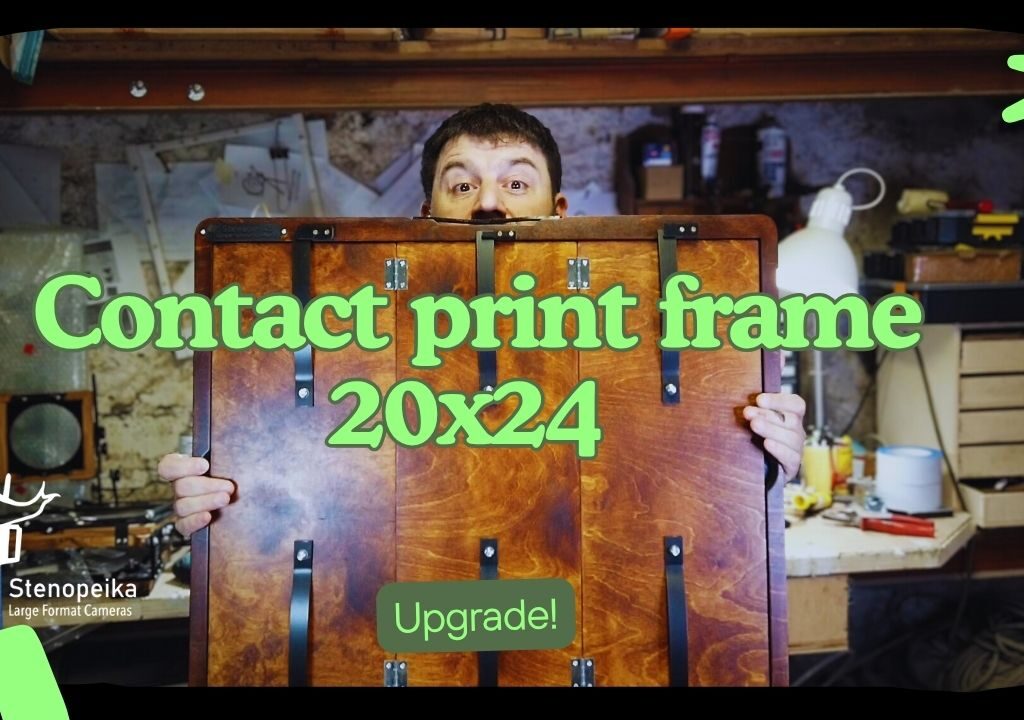
New 20×24″ Contact Print Frame Mark 2 – big format, zero problems

If you love contact printing and you’ve always felt that going up to 20x24" was “a bit too much”, this video is for you. I present the updated 20x24" Contact Print Frame Mark 2 and explain why small design details – a removable handle, a cleaner outer frame, inspection windows and optional pin register inserts – make a huge difference when you actually have to use such a big frame in real UV units and darkrooms.

When contact printing goes really big

At normal sizes, a contact print frame is “just” a tool. At 20x24", it becomes a piece of equipment: heavy, large, and constantly interacting with your UV box, your workbench and your workflow.

That’s where many projects stop: the idea of printing that big is exciting, but the thought of wrestling with a huge, awkward frame turns into self-censorship: “Not now”, “Too complicated”, “I’ll stay smaller”.

Why the Mark 2 exists

The first StenopeiKa 20x24" contact frame already did its job, but the integrated handle had one drawback: in several UV units and exposure drawers it stuck out too much. The Mark 2 was born out of that feedback: same spirit, better ergonomics.

Removable handle & cleaner frame

On the Mark 2 the handle is:

  • Removable – mount it when you carry or move the frame, remove it when you slide it into a tight UV box.
  • Low-profile – even when mounted, it’s less invasive than the previous carved handle.

The outer perimeter has also been cleaned up, so the frame goes in and out of bromographs and UV drawers with less friction and fewer acrobatics.

Inspection windows: control without losing registration

The Mark 2 keeps the three inspection windows on the back. They let you lift a portion of the back, check how the exposure is progressing and close again without shifting paper and negative.

This is especially useful when you:

  • work with alternative processes and unpredictable materials,
  • test new papers, chemistry or digital negatives,
  • want to avoid redoing a full 20x24" exposure for a tiny adjustment.

Pin register inserts for multi-exposures

An important option for this frame is the version with pin register inserts. These are designed to work with popular pin & tab systems (such as Ternes Burton) and allow you to:

  • perform multiple exposures on the same sheet,
  • make test strips and re-exposures in perfect registration,
  • place paper and negative in exactly the same position after processing, washing and drying.

If you print with gum dichromate, carbon printing, advanced cyanotype or large digital negatives, this turns “I hope it stays aligned” into a repeatable method.

What you’ll see in the video

In the video I show the 20x24" Mark 2 in hand: the new handle, the cleaner frame, the three inspection windows and the optional pin register configuration. You’ll get a concrete idea of what it means to handle a frame this size in a real darkroom, not just in theory.

🎥 Watch the video →

Sizes, compatibility & ecosystem

The Mark 2 shown in the video is the 20x24" (50×60 cm) version, but the same design logic is used across the whole StenopeiKa contact print frame family:

  • C6 – small prints and proofs,
  • A4, A3, A2 – perfect companions for 8×10", 11×14" and 16×20" negatives,
  • and custom sizes on request.

The 20x24" Contact Print Frame Mark 2 is designed for serious work with large and ultra large format negatives and digital negatives, in combination with StenopeiKa cameras and alternative process workflows.

Everything in one place

Availability note: large sizes like 20x24" are not always in stock.
Before ordering, please ask about lead times: ci**@********Ka.com.

Se ami la stampa a contatto e hai sempre sentito il passaggio al 20x24" come “un po’ troppo”, questo video è per te. Presento il nuovo Torchietto / Contact Print Frame 20x24" Mark 2 e spiego perché dettagli apparentemente piccoli – una maniglia estraibile, un telaio più pulito, le finestre di ispezione e i possibili inserti di registro – fanno una differenza enorme quando devi usare davvero un telaio così grande in bromografi e camere oscure reali.

Quando la stampa a contatto diventa davvero grande

Su formati “normali” il torchietto è “solo” uno strumento. A 20x24" diventa un vero e proprio attrezzo di lavoro: ingombrante, pesante, sempre in dialogo con il tuo bromografo, il tuo tavolo e il tuo modo di lavorare.

È spesso lì che i progetti si fermano: l’idea di stampare così grande è entusiasmante, ma la prospettiva di litigare con un telaio enorme e scomodo fa scattare l’autocensura: “Non ora”, “È troppo complicato”, “Resto più piccolo”.

Perché esiste il Mark 2

La prima versione del torchietto 20x24" StenopeiKa faceva già il suo dovere, ma la maniglia integrata nel telaio aveva un difetto pratico: in diversi bromografi e cassetti UV sporgeva troppo. Il Mark 2 nasce proprio da questo tipo di feedback: stesso spirito, ergonomia migliore.

Maniglia estraibile & telaio più pulito

Nel Mark 2 la maniglia è:

  • Estraibile – la monti quando devi spostare il torchietto, la togli quando va infilato in un cassetto o in un’unità UV più stretta.
  • A basso profilo – anche quando è montata, è meno ingombrante rispetto alla maniglia ricavata dal telaio della versione precedente.

Il perimetro esterno è stato ripensato e ripulito, così il torchietto entra ed esce da bromografi e cassetti luce con meno attriti e meno acrobazie.

Finestre di ispezione: controllo senza perdere il registro

Il Mark 2 mantiene le tre finestre di ispezione posteriori, che ti permettono di sollevare una porzione del dorso, controllare come sta andando l’esposizione e richiudere senza spostare carta e negativo.

Torna particolarmente utile quando:

  • lavori con processi alternativi e materiali poco prevedibili,
  • stai testando nuove carte, chimiche o negativi digitali,
  • vuoi evitare di rifare da zero un’esposizione 20x24" per una piccola correzione.

Inserti di registro per multi-esposizioni

Una delle opzioni interessanti per questo torchietto è la versione con inserti di registro. Sono pensati per lavorare con i comuni sistemi a perni e linguette (come i noti Ternes Burton) e ti permettono di:

  • eseguire multi-esposizioni sullo stesso foglio,
  • fare provini e ri-esposizioni con un registro controllato,
  • rimettere carta e negativo esattamente nello stesso punto dopo sviluppo, lavaggio e asciugatura.

Se stampi in gomma bicromata, carbone, cianotipia avanzata o con grandi negativi digitali, questo trasforma il “speriamo resti in registro” in un metodo ripetibile.

Cosa vedi nel video

Nel video mostro il 20x24" Mark 2 in mano: la nuova maniglia, il telaio più pulito, le tre finestre di ispezione e la configurazione con inserti di registro. Alla fine hai un’idea concreta di cosa vuol dire gestire un torchietto di queste dimensioni in camera oscura, non solo sulla carta.

🎥 Guarda il video →

Formati, compatibilità & ecosistema

Il protagonista del video è il 20x24" (50×60 cm), ma la stessa logica progettuale è alla base di tutta la famiglia di torchietti StenopeiKa:

  • C6 – per stampe piccole e provini,
  • A4, A3, A2 – compagni naturali per negativi 8×10", 11×14" e 16×20",
  • più i formati su richiesta.

Il Torchietto 20x24" Mark 2 è pensato per un lavoro serio con negativi grande e ultra grande formato e negativi digitali, in abbinamento alle fotocamere StenopeiKa e ai processi alternativi.

Tutto in un posto (finalmente)

Nota disponibilità: formati grandi come il 20x24" non sono sempre in stock.
Prima dell’ordine, chiedi i tempi di consegna: ci**@********Ka.com.

“La stampa a contatto non è nostalgia. È una decisione: lasciare che il formato parli da solo.”

Affordable 11×14 film holder mk3 by StenopeiKa – ULF You Can Actually Use

Affordable 11x14 film holder mk3 by StenopeiKa - ULF You Can Actually Use

If Ultra Large Format fascinates you but you’ve always treated it as “one step too far”, this video is for you. I explain why film holders are the real bottleneck of ULF and present a concrete, sensible entry point: the 11×14 Mark 3 film holder (double-sided, PLA, aluminum darkslide) and a full ecosystem that includes cameras and paper reversal kits (B/W and color). For the first time, 11×14 ULF becomes a format you can actually shoot, not just dream about.

When ULF is always “one step too far”

You study, research, dream about going beyond 8×10 and starting with 11×14… and then you run the numbers. Film holders are rare or overpriced, the camera threatens your balance, the chemistry looks like a rabbit hole. Self-censorship kicks in: “Not now”, “I don’t have everything yet”, “I’ll wait”. Result: ULF stays stuck in a notebook instead of on paper.

Why 11×14 is the hinge format

In my StenopeiKa lineup, ULF (Ultra Large Format) starts at 11×14 and above. 11×14 is the smallest ULF size, and that’s exactly why it matters: big enough to change how you see the world, small enough to be still manageable in terms of camera size, lenses, bellows and darkroom space.

The real bottleneck: film holders

The problem isn’t passion or skill. It’s the entry barrier: poor availability, off-the-charts prices, and too many separate pieces to hunt down. When a pair of film holders costs as much as a camera, ULF simply never gets started.

The 11×14 Mark 3 proposal

In this video I present a concrete 11×14 entry point, in one place (my website), to actually begin — without mortgaging an apartment:

  • 11×14 Mark 3 “affordable” film holder: double-sided, PLA body, 0.8 mm powder-coated aluminum darkslide. A price positioned to be sensible in today’s ULF landscape – and you can see it clearly in the comparison table.
  • StenopeiKa large and ultra large format cameras: robust, essential tools built to actually shoot, not just to sit on a shelf.
  • Paper reversal kits: black & white and color for direct positives on paper, making ULF more approachable (less dependence on rare and expensive films).

What you’ll see in the video

I show why film holders choke ULF and how the 11×14 Mark 3 unlocks the system: construction, materials, and the logic behind bringing production fully in-house at StenopeiKa. You’ll walk away with a clear idea of what it takes to start shooting 11×14 in a realistic way.

🎥 Watch the video →

Compatibility & practicality

The 11×14 Mark 3 Film Holder is designed for standard 11×14 backs. If you use StenopeiKa, it naturally integrates into a workflow built around field use: robust cameras, straightforward handling, and a system designed to be used, not feared.

Everything in one place

Availability note: ULF formats like 11×14 are not always in stock. Before ordering, please ask about lead times: ci**@********Ka.com.

Porta pellicole 11×14 Mark 3 abbordabile di StenopeiKa – ULF che puoi davvero usare

Se l’Ultra Large Format ti affascina ma l’hai sempre trattato come “un passo troppo in là”, questo video è per te. Spiego perché i porta pellicole sono il vero collo di bottiglia dell’ULF e presento una soglia d’ingresso concreta e sensata: il porta pellicole 11×14 Mark 3 (doppia faccia, corpo in PLA, volet in alluminio) e un ecosistema completo che comprende fotocamere e kit di inversione su carta (b/n e colore). Per la prima volta l’11×14 ULF diventa un formato che puoi davvero scattare, non solo immaginare.

Quando l’ULF resta sempre “un passo più in là”

Studi, ti informi, sogni di andare oltre l’8×10 e iniziare dall’11×14… poi fai i conti. I porta pellicole sono introvabili o carissimi, la fotocamera minaccia il conto in banca, la chimica sembra un labirinto senza fine. Scatta l’autocensura: “Non è il momento”, “Non ho tutto”, “Aspetto”. Risultato: l’ULF resta una cartella di appunti invece che fogli di carta esposti.

Perché l’11×14 è il formato cerniera

Nel mondo StenopeiKa, l’ULF (Ultra Large Format) inizia dall’11×14 in su. L’11×14 è il formato ULF più piccolo, ed è proprio qui il punto: abbastanza grande da cambiare il modo in cui guardi le cose, ancora abbastanza gestibile per fotocamera, ottiche, soffietti e camera oscura.

Il collo di bottiglia vero: i porta pellicole

Non mancano passione o competenza. Manca una soglia d’ingresso ragionevole: reperibilità scarsa, prezzi fuori scala e troppi pezzi da inseguire. Quando due porta pellicole costano quanto una fotocamera, l’ULF semplicemente non parte.

La proposta 11×14 Mark 3

In questo video presento una soglia d’ingresso concreta per l’11×14, in un solo luogo (il mio sito), per iniziare davvero — senza ipotecare un appartamento:

  • Porta pellicole 11×14 Mark 3 “affordable”: doppia faccia, corpo in PLA, volet in alluminio da 0,8 mm verniciato a polvere. Un prezzo posizionato in modo sensato rispetto all’attuale panorama ULF — e lo puoi verificare nella tabella comparativa.
  • Fotocamere StenopeiKa grande e ultra grande formato: robuste, essenziali, pensate per scattare, non per stare in vetrina.
  • Kit di inversione su carta: bianco e nero e colore, per ottenere positivi diretti su carta e rendere l’ULF più abbordabile (meno dipendenza da pellicole rare e costose).

Perché adesso (e cosa vedi nel video)

Mostro perché i porta pellicole bloccano l’ULF e come il Mark 3 11×14 sblocca il sistema: costruzione, materiali e logica del portare la produzione interamente “in casa” StenopeiKa. Alla fine hai un’idea chiara di cosa serve per iniziare a scattare in 11×14 in modo realistico.

🎥 Guarda il video →

Compatibilità e praticità

Il Porta Pellicole 11×14 Mark 3 è pensato per i dorsi 11×14 standard. Se lavori con StenopeiKa, si inserisce in un workflow già pensato per l’uso sul campo: fotocamere robuste, operatività diretta e un sistema progettato per essere usato, non temuto.

Tutto in un posto (finalmente)

Nota disponibilità: Formati ULF come l’11×14 non sono sempre in stock. Prima dell’ordine, chiedi i tempi di consegna: ci**@********Ka.com.

“L’ULF non deve essere un rito di passaggio costoso. Deve restare fotografia: idee, luce, carta.”

Affordable film holders for ULF!!!

ULF, finally practical — without mortgaging an apartment

Abstract. If Ultra Large Format fascinates you but you’ve been self-censoring because of cost and availability, this video is for you. I explain why film holders are ULF’s real bottleneck and present a concrete, affordable path: the 12×20 MK3 film holders (double-sided, PLA+, aluminum dark slide), an economic camera, and paper reversal kits (B/W and color). For the first time, you’ll find everything in one place.

When ULF stays an idea (not a photograph)

You study, research, dream of a 12×20… then do the math. Film holders are scarce or overpriced, the camera threatens your balance, the chemistry looks like a maze. Self-censorship kicks in: “Not now”, “I don’t have everything”, “I’ll wait.” Result: ULF remains a folder of notes.

The real bottleneck: film holders

The issue isn’t passion or skill. It’s the entry barrier: poor availability, off-the-charts prices, too many parts to hunt down. When two holders cost as much as a camera, ULF simply doesn’t take off.

The solution that lowers the barrier

In this video I share a practical proposal, in one place (my site), to truly start — without mortgaging an apartment:

  • 12×20 MK3 “affordable” film holders: double-sided, PLA+ body, aluminum dark slide. A sensible price so you can put money where it matters: shooting.
  • “Economic” StenopeiKa cameras (e.g., Air Force): robust, essential, built to actually shoot.
  • Paper reversal kits: black & white and color to get direct positives on paper and make ULF even more approachable (less dependence on rare and costly films).

Why now (and what you’ll see)

I show why film holders choke ULF and how MK3 unlocks the system. There’s a demo on the Air Force 12×20 with assisted insertion: two free hands, clean insertion, zero stress. You’ll walk away with the complete picture to get started.

🎥 Watch the video →

Compatibility & practicality

The 12×20 MK3 Film Holder is universal for all 12×20 cameras that follow the standard back. And if you use StenopeiKa, our assisted insertion makes ULF operation immediate: two free hands, no fighting the spring. MK3 is the natural complement to this workflow.

Everything in one place

Availability note: These uncommon formats are not always in stock. Before ordering, please ask about lead times: ci**@********Ka.com.

ULF finalmente praticabile — senza ipotecare un appartamento

Abstract. Se l’Ultra Large Format ti affascina ma ti sei autocensurato per costi e reperibilità, questo video è per te. Spiego perché i porta pellicole sono il vero collo di bottiglia dell’ULF e presento un percorso concreto e accessibile: i film holder 12×20 MK3 (doppia faccia, PLA+, volet in alluminio), una fotocamera economica e i kit di inversione su carta (b/n e colore). Per la prima volta trovi tutto in un solo luogo.

Quando l’ULF resta un’idea (e non una fotografia)

Studi, ti informi, sogni un 12×20… poi fai i conti. I porta pellicole sono introvabili o carissimi, la fotocamera rischia di svuotare il conto, la chimica sembra un labirinto. Scatta l’autocensura: “Non è il momento”, “Non ho tutto”, “Aspetto”. Risultato: l’ULF resta una cartella di appunti.

Il collo di bottiglia vero: i porta pellicole

Non mancano passione o competenza. Manca una soglia d’ingresso ragionevole: reperibilità scarsa, prezzi fuori scala e troppi pezzi da inseguire. Quando due holders costano quanto una fotocamera, l’ULF semplicemente non parte.

La soluzione che abbassa la soglia

In questo video presento una proposta concreta, in un solo luogo (il mio sito), per iniziare davvero — senza ipotecare un appartamento:

  • Porta pellicole 12×20 MK3 “affordable”: doppia faccia, corpo in PLA+, volet in alluminio. Prezzo sensato per rimettere i soldi dove contano: scattare.
  • Fotocamere “economiche” StenopeiKa (es. Air Force): robuste, essenziali, pensate per fare foto, non per stare in vetrina.
  • Kit di inversione su carta: bianco e nero e colore, per ottenere positivi diretti su carta e rendere l’ULF ancora più abbordabile (meno dipendenza da pellicole rare e costose).

Perché adesso (e cosa vedi nel video)

Mostro perché i film holder bloccano l’ULF e come i MK3 sbloccano il sistema. C’è la demo su Air Force 12×20 con inserimento facilitato: due mani libere, innesto pulito, zero stress. Alla fine hai il quadro completo per partire.

🎥 Guarda il video →

Compatibilità e praticità

Il Porta Pellicole 12×20 MK3 è universale per tutte le fotocamere 12×20 che rispettano lo standard del dorso. Se lavori con StenopeiKa, l’inserimento facilitato rende l’operatività ULF immediata: due mani libere, nessuna lotta con la molla. Il MK3 è il complemento naturale di questo workflow.

Tutto in un posto (finalmente)

Nota disponibilità: Formati così insoliti non sono sempre in stock. Prima dell’ordine, chiedi i tempi di consegna: ci**@********Ka.com.

“L’ULF non deve essere un rito di passaggio costoso. Deve essere fotografia: idee, luce, carta.”

video portafiltri

Essential for color photography – filter holder

Starting today, you can finally shoot color photographs directly onto photographic paper with the new maseidaltonico? kit, available at www.stenopeika.com.

In this video I’ll explain:
📦 What’s inside the maseidaltonico? kit
📸 How the direct-to-positive process works with Fuji Crystal color paper
🎨 Why you need an amber filter (and more!) to achieve accurate color rendition
🧰 Everything about the new Stenopeika filter holder, specifically designed to work with this process:
 • Available in 10×10 and 15×15 cm versions
 • Designed to hold acetate or glass color filters, including the amber Wratten 85B
 • Mounts tool-free on all Stenopeika cameras (and with some effort, even on others)
 • Magnetic compendium
 • Lightweight yet rigid structure, built for field use
🎞️ Also great for black and white photography – because even the world of greys deserves to be filtered in style.

🔧 If you work with unusual formats or out-of-the-box materials (like Cibachrome), I can build custom solutions on request.

We tested the full setup in three different lighting conditions:
✅ In the studio with controlled lighting
✅ Outdoors with studio flashes
✅ In direct sunlight with natural light

🧪 At the heart of the process is the perfect synergy between chemistry and light control. The filter holder plays a key role in achieving a direct color print inside the camera, with no need for a negative.

Products pages:
👉 filter holder 15×15: https://www.stenopeika.com/product/filter-holder-15×15/
👉 filter holder 10×10: https://www.stenopeika.com/product/filter-holder-10×10/
👉 kit “maseidaltonico?”: https://www.stenopeika.com/product/maseidaltonico-reversal-paper-color-kit/

📬 For technical questions or custom requests, reach out via the website.
👉 www.stenopeika.com

📩 Want more exclusive content? Subscribe to the newsletter here 👉 https://www.stenopeika.com/i-want-to-be-updated/

—

Da oggi puoi finalmente scattare fotografie a colori direttamente su carta fotografica con il nuovo kit maseidaltonico?, disponibile su www.stenopeika.com.

In questo video ti spiego:
📦 Cosa contiene il kit maseidaltonico?
📸 Come funziona il processo di sviluppo diretto positivo su carta colore Fuji Crystal
🎨 Perché serve un filtro ambra (e non solo!) per ottenere una resa cromatica corretta
🧰 Tutto sul nuovo portafiltri Stenopeika, progettato appositamente per lavorare con questo processo:
 • Disponibile in versione 10×10 e 15×15 cm
 • Studiato per ospitare filtri colore in acetato o vetro, incluso l’ambra Wratten 85B
 • Si monta senza strumenti su tutte le fotocamere StenopeiKa (meglio) e non (peggio, per voi)
 • Compendium magnetico
 • Struttura rigida ma leggera, pensata per l’uso sul campo
🎞️ Utile anche per la fotografia in bianco e nero: perché anche il mondo dei grigi merita di essere filtrato con stile.

🔧 Se hai esigenze particolari o lavori con formati o materiali fuori standard (tipo Cibachrome), posso realizzare adattamenti su richiesta.

Abbiamo testato tutto in tre condizioni diverse:
✅ In studio con luci controllate
✅ All’aperto con flash da studio
✅ In pieno sole in luce naturale

🧪 Il cuore del processo è l’integrazione perfetta tra chimica e controllo della luce. Il portafiltri gioca un ruolo fondamentale per ottenere una stampa a colori direttamente in macchina, senza passare per il negativo.

📬 Per info tecniche o richieste personalizzate scrivimi direttamente dal sito.
👉 www.stenopeika.com

Pagine prodotti:
👉 porta filtri 15×15: https://www.stenopeika.com/product/filter-holder-15×15/
👉 porta filtri 10×10: https://www.stenopeika.com/product/filter-holder-10×10/
👉 kit “maseidaltonico?”: https://www.stenopeika.com/product/maseidaltonico-reversal-paper-color-kit/

📩 Vuoi altri contenuti esclusivi? Iscriviti alla newsletter qui 👉 https://www.stenopeika.com/i-want-to-be-updated/

forget polaroid (1)

Forget Polaroid: this is true direct color photography with Minutero 2.0 and maseidaltonico?

🎞️ In this video, we put an unprecedented combination to the test: Minutero 2.0 + D100 developer + maseidaltonico RA4 kit.
The result? Full-color positives on photographic paper, developed directly in-camera—no film involved.
A new frontier of direct photography that recalls the magic of Polaroid… but goes far beyond.

📍 Shot at Villa Rospigliosi with Paolo Mazzo, Beatrice Mancini, and Mimo Visconti, this test proves that it’s possible to produce ready-to-view color images on traditional photographic paper, instantly.

📸 During the day, we created three different types of shots:

One fully controlled, using only flash lighting, to evaluate the optimal performance of the process.

One mixed flash + ambient light, a real-life scenario but tricky to balance without a color temperature meter.

And finally, one shot entirely with ambient light, to test the color response in natural conditions.
Three scenarios, three results, one single process.

📷 For filming, we also used the Air Force 8×10—perfect for fast and precise field work.
🔗 https://www.stenopeika.com/product/air-force-8×10/

🔲 Enabling accurate color filtration was the new 10×10 filter holder—essential for large format work with RA4 paper.
🔗 https://www.stenopeika.com/product/filter-holder-10×10/

👥 Alongside our artistic team, the models included Filippo and Guglielmo from Bellini Foto Srl, Stefano (villa manager), Giulio (the chef), and… Francesca, the ghost who lives in Villa Rospigliosi.
Discreet and reserved, Francesca vanished right at the moment of the shot, leaving Stefano and Giulio posing alone.

📦 maseidaltonico? kit available here:
👉 https://www.stenopeika.com/product/maseidaltonico-reversal-paper-color-kit/

📸 Minutero 2.0 – The field camera for direct positive printing:
👉 https://www.stenopeika.com/product/minutero-2-0-8×10-direct-positive-in-camera/

🎨 At the end, Beatrice shares some possible artistic applications of this technique: portraits, visual storytelling, performance-based use… and why not, a new way of experiencing color in analog photography.

📩 Want exclusive content? Subscribe to our newsletter here 👉 https://www.stenopeika.com/i-want-to-be-updated/

—

🎞️ In questo video mettiamo alla prova una combinazione inedita: Minutero 2.0 + sviluppo D100 + kit RA4 maseidaltonico?
Il risultato? Positivi a colori su carta fotografica, direttamente in camera, senza pellicola.
Una nuova frontiera della fotografia diretta, che ricorda la magia della Polaroid… ma è molto di più.

📍 Girato a Villa Rospigliosi, insieme a Paolo Mazzo, Beatrice Mancini e Mimo Visconti, questo test dimostra che è possibile ottenere immagini a colori pronte sul momento, su carta fotografica tradizionale.

📸 Durante la giornata abbiamo realizzato tre tipi di scatti:

Uno completamente controllato, solo con luce flash, per valutare la resa ottimale del processo.

Uno misto flash + luce ambiente, una situazione reale ma difficile da bilanciare senza termocolorimetro.

E infine uno completamente in luce ambiente, per testare la risposta cromatica in condizioni naturali.
Tre scenari, tre risposte, un unico processo.

📷 Per le riprese abbiamo utilizzato anche una Air Force 8×10, perfetta per lavorare sul campo con rapidità e precisione.
🔗 https://www.stenopeika.com/product/air-force-8×10/

🔲 A rendere possibile la filtratura precisa dei colori è stato il nuovo portafiltri 10×10, indispensabile per lavorare in grande formato con carta RA4.
🔗 https://www.stenopeika.com/product/filter-holder-10×10/

👥 Come modelli, oltre al nostro team artistico, si sono prestati anche Filippo e Guglielmo di Bellini Foto Srl, Stefano (responsabile della villa), Giulio (il cuoco) e… Francesca, il fantasma che abita Villa Rospigliosi.
Discreta e riservata, Francesca si è dileguata proprio al momento dello scatto, lasciando Stefano e Giulio da soli in posa.

📦 Kit maseidaltonico? disponibile qui:
👉 https://www.stenopeika.com/product/maseidaltonico-reversal-paper-color-kit/

📸 Minutero 2.0 – La fotocamera da campo per la stampa diretta:
👉 https://www.stenopeika.com/product/minutero-2-0-8×10-direct-positive-in-camera/

🎨 Alla fine, Beatrice ci racconta alcune possibili applicazioni artistiche di questa tecnica: ritratti, narrazione visiva, uso performativo… e perché no, un nuovo modo di vivere il colore nella fotografia analogica.

📩 Vuoi altri contenuti esclusivi? Iscriviti alla newsletter qui 👉 https://www.stenopeika.com/i-want-to-be-updated/